


Page 27 - Read Online
P. 27
Page 20 of 33                          Liu et al. J Mater Inf 2024;4:33  https://dx.doi.org/10.20517/jmi.2024.48


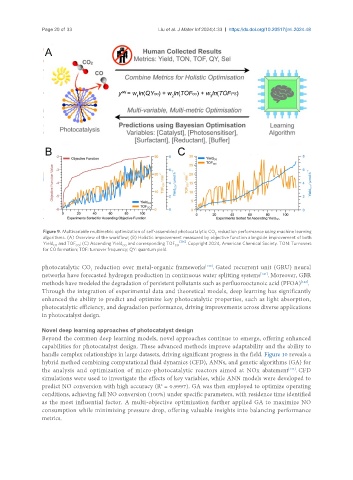
                Figure 9. Multivariable multimetric optimization of self-assembled photocatalytic CO  reduction performance using machine learning
                                                                         2
                algorithms. (A) Overview of the workflow; (B) Holistic improvement measured by objective function alongside improvement of both
                                                              [136]
                Yield  and TOF ; (C) Ascending Yield  and corresponding TOF  . Copyright 2024, American Chemical Society. TON: Turnovers
                   CO      CO             CO                CO
                for CO formation; TOF: turnover frequency; QY: quantum yield.
               photocatalytic CO  reduction over metal-organic frameworks . Gated recurrent unit (GRU) neural
                                                                      [140]
                                2
               networks have forecasted hydrogen production in continuous water splitting systems . Moreover, GBR
                                                                                         [141]
               methods have modeled the degradation of persistent pollutants such as perfluorooctanoic acid (PFOA) .
                                                                                                      [142]
               Through the integration of experimental data and theoretical models, deep learning has significantly
               enhanced the ability to predict and optimize key photocatalytic properties, such as light absorption,
               photocatalytic efficiency, and degradation performance, driving improvements across diverse applications
               in photocatalyst design.

               Novel deep learning approaches of photocatalyst design
               Beyond the common deep learning models, novel approaches continue to emerge, offering enhanced
               capabilities for photocatalyst design. These advanced methods improve adaptability and the ability to
               handle complex relationships in large datasets, driving significant progress in the field. Figure 10 reveals a
               hybrid method combining computational fluid dynamics (CFD), ANNs, and genetic algorithms (GA) for
               the analysis and optimization of micro-photocatalytic reactors aimed at NOx abatement . CFD
                                                                                                  [143]
               simulations were used to investigate the effects of key variables, while ANN models were developed to
               predict NO conversion with high accuracy (R  = 0.9997). GA was then employed to optimize operating
                                                       2
               conditions, achieving full NO conversion (100%) under specific parameters, with residence time identified
               as the most influential factor. A multi-objective optimization further applied GA to maximize NO
               consumption while minimizing pressure drop, offering valuable insights into balancing performance
               metrics.

