


Page 32 - Read Online
P. 32
Liu et al. J Mater Inf 2024;4:33  https://dx.doi.org/10.20517/jmi.2024.48       Page 25 of 33


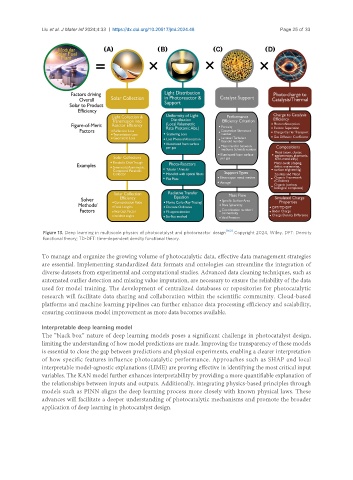
                Figure 13. Deep learning in multiscale physics of photocatalyst and photoreactor  design [160] . Copyright 2024, Wiley. DFT: Density
                functional theory; TD-DFT: time-dependent density functional theory.

               To manage and organize the growing volume of photocatalytic data, effective data management strategies
               are essential. Implementing standardized data formats and ontologies can streamline the integration of
               diverse datasets from experimental and computational studies. Advanced data cleaning techniques, such as
               automated outlier detection and missing value imputation, are necessary to ensure the reliability of the data
               used for model training. The development of centralized databases or repositories for photocatalytic
               research will facilitate data sharing and collaboration within the scientific community. Cloud-based
               platforms and machine learning pipelines can further enhance data processing efficiency and scalability,
               ensuring continuous model improvement as more data becomes available.

               Interpretable deep learning model
               The “black box” nature of deep learning models poses a significant challenge in photocatalyst design,
               limiting the understanding of how model predictions are made. Improving the transparency of these models
               is essential to close the gap between predictions and physical experiments, enabling a clearer interpretation
               of how specific features influence photocatalytic performance. Approaches such as SHAP and local
               interpretable model-agnostic explanations (LIME) are proving effective in identifying the most critical input
               variables. The KAN model further enhances interpretability by providing a more quantifiable explanation of
               the relationships between inputs and outputs. Additionally, integrating physics-based principles through
               models such as PINN aligns the deep learning process more closely with known physical laws. These
               advances will facilitate a deeper understanding of photocatalytic mechanisms and promote the broader
               application of deep learning in photocatalyst design.

