


Page 22 - Read Online
P. 22
Pei et al. J Mater Inf 2023;3:26  https://dx.doi.org/10.20517/jmi.2023.35        Page 5 of 14


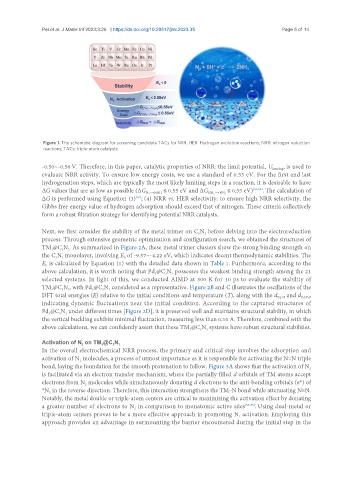
                Figure 1. The schematic diagram for screening candidate TACs for NRR. HER: Hydrogen evolution reactions; NRR: nitrogen reduction
                reactions; TACs: triple-atom catalysts.

               -0.50~-0.56 V. Therefore, in this paper, catalytic properties of NRR: the limit potential, U limiting , is used to
               evaluate NRR activity. To ensure low energy costs, we use a standard of 0.55 eV. For the first and last
               hydrogenation steps, which are typically the most likely limiting steps in a reaction, it is desirable to have
               ∆G values that are as low as possible (∆G N 2 →NNH  ≤ 0.55 eV and ∆G NH 2 →NH 3  ≤ 0.55 eV) [61,62] . The calculation of
                                               [61]
               ∆G is performed using Equation (3) ; (4) NRR vs. HER selectivity: to ensure high NRR selectivity, the
               Gibbs free energy value of hydrogen adsorption should exceed that of nitrogen. These criteria collectively
               form a robust filtration strategy for identifying potential NRR catalysts.


               Next, we first consider the stability of the metal trimer on C N  before delving into the electroreduction
                                                                    3
                                                                      3
               process. Through extensive geometric optimization and configuration search, we obtained the structures of
               TM @C N . As summarized in Figure 2A, these metal trimer clusters show the strong binding strength on
                      3
                  3
                        3
               the C N  monolayer, involving E  of -9.57~-4.22 eV, which indicates decent thermodynamic stabilities. The
                                           b
                      3
                    3
               E  is calculated by Equation (1) with the detailed data shown in Table 1. Furthermore, according to the
                b
               above calculation, it is worth noting that Pd @C N  possesses the weakest binding strength among the 21
                                                         3
                                                     3
                                                           3
               selected systems. In light of this, we conducted AIMD at 300 K for 10 ps to evaluate the stability of
               TM @C N , with Pd @C N  considered as a representative. Figure 2B and C illustrates the oscillations of the
                        3
                  3
                      3
                                3
                                      3
                                    3
               DFT total energies (E) relative to the initial conditions and temperature (T), along with the d Pd-N  and d Pd-Pd ,
               indicating dynamic fluctuations near the initial condition. According to the captured structures of
               Pd @C N  under different times [Figure 2D], it is preserved well and maintains structural stability, in which
                       3
                 3
                     3
               the vertical buckling exhibits minimal fluctuation, measuring less than 0.10 Å. Therefore, combined with the
               above calculations, we can confidently assert that these TM @C N  systems have robust structural stabilities.
                                                                 3
                                                                    3
                                                                       3
               Activation of N  on TM @C N
                             2     3   3  3
               In the overall electrochemical NRR process, the primary and critical step involves the adsorption and
               activation of N  molecules, a process of utmost importance as it is responsible for activating the N≡N triple
                            2
               bond, laying the foundation for the smooth protonation to follow. Figure 3A shows that the activation of N 2
               is facilitated via an electron transfer mechanism, where the partially filled d orbitals of TM atoms accept
               electrons from N  molecules while simultaneously donating d electrons to the anti-bonding orbitals (π*) of
                              2
               *N  in the reverse direction. Therefore, this interaction strengthens the TM–N bond while attenuating N≡N.
                  2
               Notably, the metal double or triple-atom centers are critical to maximizing the activation effect by donating
               a greater number of electrons to N  in comparison to monatomic active sites [63-66] . Using dual-metal or
                                              2
               triple-atom centers proves to be a more effective approach in promoting N  activation. Employing this
                                                                                  2
               approach provides an advantage in surmounting the barrier encountered during the initial step in the

