


Page 15 - Read Online
P. 15
Hammel et al. J Environ Expo Assess 2024;3:8  https://dx.doi.org/10.20517/jeea.2023.51                                      Page 9 of 17

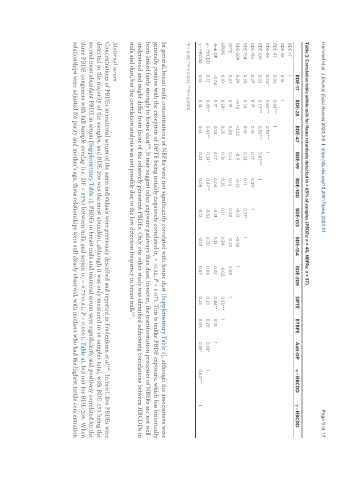
               Table 3. Correlation table within milk for flame retardants detected in > 65% of samples (PBDEs: n = 40, NBFRs: n = 37)
                          BDE-17   BDE-28  BDE-47   BDE-99   BDE-100   BDE-153   BDE-154   BDE-209   DPTE   BTBPE   Anti-DP  α - HBCDD   γ - HBCDD
                BDE-17    1
                BDE-28    0.15     1
                BDE-47    0.06     0.84***  1
                BDE-99    0.34*    0.69***  0.82***  1
                BDE-100   0.03     0.73***  0.85***  0.63***  1
                BDE-153   0.27     0.17    0.18     0.17     0.35*     1
                BDE-154   0.30     0.24    0.18     0.24     0.11      0.33*     1
                BDE-209   0.29     -0.16   -0.23    -0.11    -0.13     -0.13     -0.06     1
                DPTE      0.07     0.19    0.08     0.14     0.14      0.00      -0.03     0.00      1
                BTBPE     0.10     0.38*   0.25     0.31     0.25      0.11      0.24      -0.02     0.55***  1
                Anti-DP   -0.04    0.17    0.23     0.17     0.04      -0.31     0.13      0.22      0.44**  0.13   1
                α - HBCDD  0.12    0.45**  0.43**   0.34*    0.47**    -0.02     0.20      0.00      0.23   0.20    0.38*    1
                γ - HBCDD   0.14   0.18    0.14     0.23     0.08      -0.12     -0.01     0.07      0.23   0.06    0.35*    0.64***     1
               *P < 0.05; **P < 0.001; ***P < 0.0001.


               In general, breast milk concentrations of NBFRs were not significantly correlated with house dust [Supplementary Table 3], although the associations were
               generally positive with the exception of DPTE being notably negatively correlated (r  = -0.32, P = 0.07). This is unlike PBDE exposure, which has historically
                                                                                       s
                                                 [79]
               been linked fairly strongly to house dust . It may suggest other exposure pathways than dust; however, the transformation processes of NBFRs are not well-
               understood and might differ from those of the relatively persistent PBDEs. Only one other study was identified addressing correlations between HBCDDs in
               milk and dust, but the correlation analysis was not possible due to the low detection frequency in breast milk .
                                                                                                          [56]
               Maternal serum
               Concentrations of PBDEs in maternal serum of the same individuals were previously described and reported in Frederiksen et al. . In brief, five PBDEs were
                                                                                                                            [42]
               detected in the majority of the samples, and BDE-209 was the most abundant, although it was only measured in 18 samples total, with BDE-153 being the
               second most abundant PBDE in serum [Supplementary Table 1]. PBDEs in breast milk and maternal serum were significantly and positively correlated for the
               three PBDE congeners with full sample overlap (i.e. DF > 65%) between milk and serum (r  = 0.73-0.81, P < 0.0001; Table 4), but not for BDE-209. When
                                                                                              s
               relationships were adjusted for parity and mother’s age, these relationships were still clearly observed, with mothers who had the highest tertile concentration

