


Page 35 - Read Online
P. 35
Page 6 of 13           Echarte-Morales et al. Vessel Plus 2021;5:54  https://dx.doi.org/10.20517/2574-1209.2020.105

               Table 3. Case series of percutaneous mitral valve repair with MitraClip after failing mitral valve repair
                                                                                         Acute procedural
                           Number of   Age   STS score   Etiology of native MR  Main mechanism of
                Case series                                                              success (MR ≤ 2+)
                           patients  (years)  (%)        PMR/SMR (%)   recurrence        (%)
                Grasso et al. [30]  6  74.8  6.2      0        100     Leaflet tethering   100
                                                                       (Carpentier IIIB)
                Estévez et al. [31]  6  69.8  **      33.3     66.7    Leaflet tethering   100
                                                                       (Carpentier IIIB)
                Pleger et al. [27]  7  78    7.5      0        100     Leaflet tethering   100
                                                                       (Carpentier IIIB)
                       [28]
                Niikura et al.  12   70      6.5      91.7     8.3     Recurrent leaflet prolapse  66.7
                                                                       or flail (Carpentier II)
                      [29]
                Braun et al.  57     76      6        39       52      Recurrent leaflet prolapse  84
                                                                       or flail (Carpentier II)
                                                                       Leaflet tethering
                                                                       (Carpentier IIIB)
               **Not available. STS: Society Thoracic of Surgeons; PMR: primary mitral regurgitation; FMR: secondary mitral regurgitation; MR: mitral
               regurgitation.


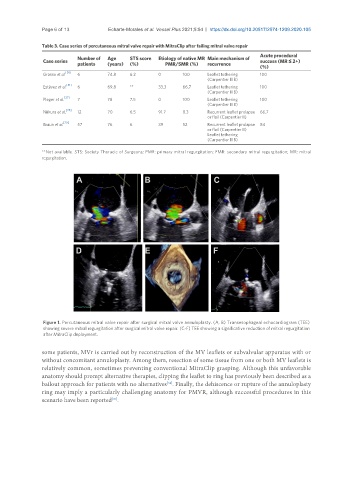
                Figure 1. Percutaneous mitral valve repair after surgical mitral valve annuloplasty. (A, B) Transesophageal echocardiogram (TEE)
                showing severe mitral regurgitation after surgical mitral valve repair. (C-F) TEE showing a significative reduction of mitral regurgitation
                after MitraClip deployment.

               some patients, MVr is carried out by reconstruction of the MV leaflets or subvalvular apparatus with or
               without concomitant annuloplasty. Among them, resection of some tissue from one or both MV leaflets is
               relatively common, sometimes preventing conventional MitraClip grasping. Although this unfavorable
               anatomy should prompt alternative therapies, clipping the leaflet to ring has previously been described as a
               bailout approach for patients with no alternatives . Finally, the dehiscence or rupture of the annuloplasty
                                                         [34]
               ring may imply a particularly challenging anatomy for PMVR, although successful procedures in this
               scenario have been reported .
                                       [35]

