


Page 33 - Read Online
P. 33
Page 4 of 13           Echarte-Morales et al. Vessel Plus 2021;5:54  https://dx.doi.org/10.20517/2574-1209.2020.105

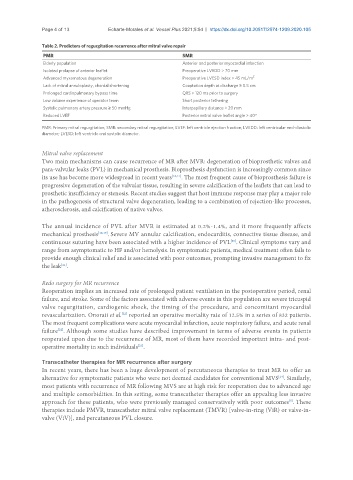
               Table 2. Predictors of regurgitation recurrence after mitral valve repair
                PMR                                            SMR
                Elderly population                             Anterior and posterior myocardial infarction
                Isolated prolapse of anterior leaflet          Preoperative LVEDD > 70 mm
                                                                                      2
                Advanced myxomatous degeneration               Preoperative LVESD index > 45 mL/m
                Lack of mitral annuloplasty, chordal shortening  Coaptation depth at discharge ≥ 0.5 cm
                Prolonged cardiopulmonary bypass time          QRS > 120 ms prior to surgery
                Low volume experience of operator team         Short posterior tethering
                Systolic pulmonary artery pressure ≥ 50 mmHg   Interpapillary distance > 20 mm
                Reduced LVEF                                   Posterior mitral valve leaflet angle > 40°
               PMR: Primary mitral regurgitation; SMR: secondary mitral regurgitation; LVEF: left ventricle ejection fraction; LVEDD: left ventricular end-diastolic
               diameter; LVESD: left ventricle end systolic diameter.


               Mitral valve replacement
               Two main mechanisms can cause recurrence of MR after MVR: degeneration of bioprosthetic valves and
               para-valvular leaks (PVL) in mechanical prosthesis. Bioprosthesis dysfunction is increasingly common since
               its use has become more widespread in recent years [16,17] . The most frequent cause of bioprosthesis failure is
               progressive degeneration of the valvular tissue, resulting in severe calcification of the leaflets that can lead to
               prosthetic insufficiency or stenosis. Recent studies suggest that host immune response may play a major role
               in the pathogenesis of structural valve degeneration, leading to a combination of rejection-like processes,
               atherosclerosis, and calcification of native valves.


               The annual incidence of PVL after MVR is estimated at 0.2%-1.4%, and it more frequently affects
               mechanical prosthesis [18,19] . Severe MV annular calcification, endocarditis, connective tissue disease, and
                                                                               [20]
               continuous suturing have been associated with a higher incidence of PVL . Clinical symptoms vary and
               range from asymptomatic to HF and/or hemolysis. In symptomatic patients, medical treatment often fails to
               provide enough clinical relief and is associated with poor outcomes, prompting invasive management to fix
               the leak .
                      [21]

               Redo surgery for MR recurrence
               Reoperation implies an increased rate of prolonged patient ventilation in the postoperative period, renal
               failure, and stroke. Some of the factors associated with adverse events in this population are severe tricuspid
               valve regurgitation, cardiogenic shock, the timing of the procedure, and concomitant myocardial
               revascularization. Onorati et al.  reported an operative mortality rate of 12.5% in a series of 832 patients.
                                          [22]
               The most frequent complications were acute myocardial infarction, acute respiratory failure, and acute renal
               failure . Although some studies have described improvement in terms of adverse events in patients
                     [22]
               reoperated upon due to the recurrence of MR, most of them have recorded important intra- and post-
               operative mortality in such individuals .
                                                [23]

               Transcatheter therapies for MR recurrence after surgery
               In recent years, there has been a huge development of percutaneous therapies to treat MR to offer an
                                                                                               [24]
               alternative for symptomatic patients who were not deemed candidates for conventional MVS . Similarly,
               most patients with recurrence of MR following MVS are at high risk for reoperation due to advanced age
               and multiple comorbidities. In this setting, some transcatheter therapies offer an appealing less invasive
                                                                                                  [5]
               approach for these patients, who were previously managed conservatively with poor outcomes . These
               therapies include PMVR, transcatheter mitral valve replacement (TMVR) [valve-in-ring (ViR) or valve-in-
               valve (ViV)], and percutaneous PVL closure.

