


Page 21 - Read Online
P. 21
Lee et al. Vessel Plus 2021;5:8  I  http://dx.doi.org/10.20517/2574-1209.2020.72                                                Page 3 of 8


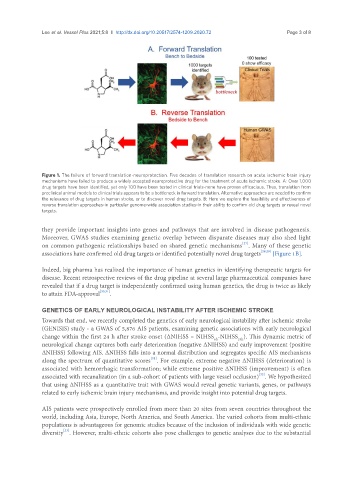
               Figure 1. The failure of forward translation-neuroprotection. Five decades of translation research on acute ischemic brain injury
               mechanisms have failed to produce a widely accepted neuroprotective drug for the treatment of acute ischemic stroke. A: Over 1,000
               drug targets have been identified, yet only 100 have been tested in clinical trials-none have proven efficacious. Thus, translation from
               preclinical animal models to clinical trials appears to be a bottleneck in forward translation. Alternative approaches are needed to confirm
               the relevance of drug targets in human stroke, or to discover novel drug targets. B: Here we explore the feasibility and effectiveness of
               reverse translation approaches-in particular genome-wide association studies-in their ability to confirm old drug targets or reveal novel
               targets.

               they provide important insights into genes and pathways that are involved in disease pathogenesis.
               Moreover, GWAS studies examining genetic overlap between disparate diseases may also shed light
                                                                                   [27]
               on common pathogenic relationships based on shared genetic mechanisms . Many of these genetic
               associations have confirmed old drug targets or identified potentially novel drug targets [28,29]  [Figure 1B].


               Indeed, big pharma has realized the importance of human genetics in identifying therapeutic targets for
               disease. Recent retrospective reviews of the drug pipeline at several large pharmaceutical companies have
               revealed that if a drug target is independently confirmed using human genetics, the drug is twice as likely
               to attain FDA-approval [30,31] .

               GENETICS OF EARLY NEUROLOGICAL INSTABILITY AFTER ISCHEMIC STROKE
               Towards that end, we recently completed the genetics of early neurological instability after ischemic stroke
               (GENISIS) study - a GWAS of 5,876 AIS patients, examining genetic associations with early neurological
               change within the first 24 h after stroke onset (ΔNIHSS = NIHSS -NIHSS ). This dynamic metric of
                                                                         6h
                                                                                 24h
               neurological change captures both early deterioration (negative ΔNIHSS) and early improvement (positive
               ΔNIHSS) following AIS. ΔNIHSS falls into a normal distribution and segregates specific AIS mechanisms
                                                    [32]
               along the spectrum of quantitative scores . For example, extreme negative ΔNIHSS (deterioration) is
               associated with hemorrhagic transformation; while extreme positive ΔNIHSS (improvement) is often
               associated with recanalization (in a sub-cohort of patients with large vessel occlusion) . We hypothesized
                                                                                        [32]
               that using ΔNIHSS as a quantitative trait with GWAS would reveal genetic variants, genes, or pathways
               related to early ischemic brain injury mechanisms, and provide insight into potential drug targets.

               AIS patients were prospectively enrolled from more than 20 sites from seven countries throughout the
               world, including Asia, Europe, North America, and South America. The varied cohorts from multi-ethnic
               populations is advantageous for genomic studies because of the inclusion of individuals with wide genetic
                      [33]
               diversity . However, multi-ethnic cohorts also pose challenges to genetic analyses due to the substantial

