


Page 23 - Read Online
P. 23
Lee et al. Vessel Plus 2021;5:8  I  http://dx.doi.org/10.20517/2574-1209.2020.72                                                Page 5 of 8


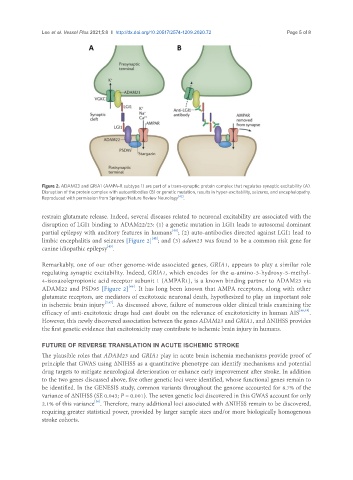
               Figure 2. ADAM23 and GRIA1 (AMPA-R subtype 1) are part of a trans-synaptic protein complex that regulates synaptic excitability (A).
               Disruption of the protein complex with autoantibodies (B) or genetic mutation, results in hyper-excitability, seizures, and encephalopathy.
               Reproduced with permission from Springer/Nature Review Neurology [42] .

               restrain glutamate release. Indeed, several diseases related to neuronal excitability are associated with the
               disruption of LGI1 binding to ADAM22/23: (1) a genetic mutation in LGI1 leads to autosomal dominant
                                                           [44]
               partial epilepsy with auditory features in humans ; (2) auto-antibodies directed against LGI1 lead to
                                                    [42]
               limbic encephalitis and seizures [Figure 2] ; and (3) adam23 was found to be a common risk gene for
                                     [45]
               canine idiopathic epilepsy .
               Remarkably, one of our other genome-wide associated genes, GRIA1, appears to play a similar role
               regulating synaptic excitability. Indeed, GRIA1, which encodes for the α-amino-3-hydroxy-5-methyl-
               4-isoxazolepropionic acid receptor subunit 1 (AMPAR1), is a known binding partner to ADAM23 via
                                            [46]
               ADAM22 and PSD95 [Figure 2] . It has long been known that AMPA receptors, along with other
               glutamate receptors, are mediators of excitotoxic neuronal death, hypothesized to play an important role
               in ischemic brain injury [7,47] . As discussed above, failure of numerous older clinical trials examining the
               efficacy of anti-excitotoxic drugs had cast doubt on the relevance of excitotoxicity in human AIS [48,49] .
               However, this newly discovered association between the genes ADAM23 and GRIA1, and ΔNIHSS provides
               the first genetic evidence that excitotoxicity may contribute to ischemic brain injury in humans.


               FUTURE OF REVERSE TRANSLATION IN ACUTE ISCHEMIC STROKE
               The plausible roles that ADAM23 and GRIA1 play in acute brain ischemia mechanisms provide proof of
               principle that GWAS using ΔNIHSS as a quantitative phenotype can identify mechanisms and potential
               drug targets to mitigate neurological deterioration or enhance early improvement after stroke. In addition
               to the two genes discussed above, five other genetic loci were identified, whose functional genes remain to
               be identified. In the GENESIS study, common variants throughout the genome accounted for 8.7% of the
               variance of ΔNIHSS (SE 0.043; P = 0.001). The seven genetic loci discovered in this GWAS account for only
                                 [36]
               2.1% of this variance . Therefore, many additional loci associated with ΔNIHSS remain to be discovered,
               requiring greater statistical power, provided by larger sample sizes and/or more biologically homogenous
               stroke cohorts.

