


Page 24 - Read Online
P. 24
Page 6 of 8                                                   Lee et al. Vessel Plus 2021;5:8  I  http://dx.doi.org/10.20517/2574-1209.2020.72


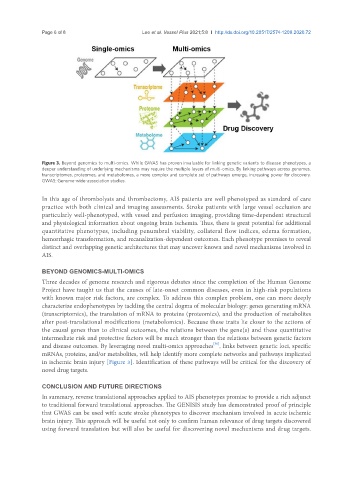
               Figure 3. Beyond genomics to multi-omics. While GWAS has proven invaluable for linking genetic variants to disease phenotypes, a
               deeper understanding of underlying mechanisms may require the multiple layers of multi-omics. By linking pathways across genomes,
               transcriptomes, proteomes, and metabolomes, a more complex and complete set of pathways emerge, increasing power for discovery.
               GWAS: Genome-wide-association studies.


               In this age of thrombolysis and thrombectomy, AIS patients are well phenotyped as standard of care
               practice with both clinical and imaging assessments. Stroke patients with large vessel occlusion are
               particularly well-phenotyped, with vessel and perfusion imaging, providing time-dependent structural
               and physiological information about ongoing brain ischemia. Thus, there is great potential for additional
               quantitative phenotypes, including penumbral viability, collateral flow indices, edema formation,
               hemorrhagic transformation, and recanalization-dependent outcomes. Each phenotype promises to reveal
               distinct and overlapping genetic architectures that may uncover known and novel mechanisms involved in
               AIS.

               BEYOND GENOMICS-MULTI-OMICS
               Three decades of genome research and rigorous debates since the completion of the Human Genome
               Project have taught us that the causes of late-onset common diseases, even in high-risk populations
               with known major risk factors, are complex. To address this complex problem, one can more deeply
               characterize endophenotypes by tackling the central dogma of molecular biology: genes generating mRNA
               (transcriptomics), the translation of mRNA to proteins (proteomics), and the production of metabolites
               after post-translational modifications (metabolomics). Because these traits lie closer to the actions of
               the causal genes than to clinical outcomes, the relations between the gene(s) and these quantitative
               intermediate risk and protective factors will be much stronger than the relations between genetic factors
                                                                         [50]
               and disease outcomes. By leveraging novel multi-omics approaches , links between genetic loci, specific
               mRNAs, proteins, and/or metabolites, will help identify more complete networks and pathways implicated
               in ischemic brain injury [Figure 3]. Identification of these pathways will be critical for the discovery of
               novel drug targets.

               CONCLUSION AND FUTURE DIRECTIONS
               In summary, reverse translational approaches applied to AIS phenotypes promise to provide a rich adjunct
               to traditional forward translational approaches. The GENISIS study has demonstrated proof of principle
               that GWAS can be used with acute stroke phenotypes to discover mechanism involved in acute ischemic
               brain injury. This approach will be useful not only to confirm human relevance of drug targets discovered
               using forward translation but will also be useful for discovering novel mechanisms and drug targets.

