


Page 69 - Read Online
P. 69
Rinaldi et al. Vessel Plus 2024;8:21  https://dx.doi.org/10.20517/2574-1209.2023.65   Page 13 of 19


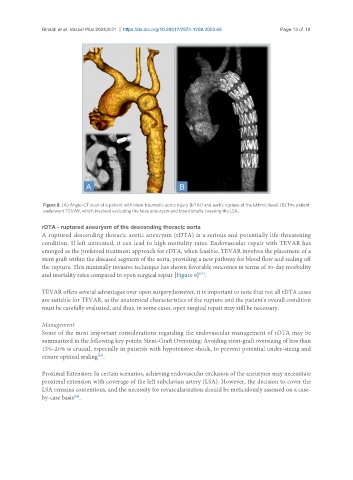
                Figure 8. (A) Angio-CT scan of a patient with blunt traumatic aortic injury (bTAI) and aortic rupture at the isthmic level. (B) The patient
                underwent TEVAR, which involved excluding the false aneurysm and intentionally covering the LSA.

               rDTA - ruptured aneurysm of the descending thoracic aorta
               A ruptured descending thoracic aortic aneurysm (rDTA) is a serious and potentially life-threatening
               condition. If left untreated, it can lead to high mortality rates. Endovascular repair with TEVAR has
               emerged as the preferred treatment approach for rDTA, when feasible. TEVAR involves the placement of a
               stent graft within the diseased segment of the aorta, providing a new pathway for blood flow and sealing off
               the rupture. This minimally invasive technique has shown favorable outcomes in terms of 30-day morbidity
               and mortality rates compared to open surgical repair [Figure 9] .
                                                                    [67]

               TEVAR offers several advantages over open surgery;however, it is important to note that not all rDTA cases
               are suitable for TEVAR, as the anatomical characteristics of the rupture and the patient's overall condition
               must be carefully evaluated, and thus, in some cases, open surgical repair may still be necessary.


               Management
               Some of the most important considerations regarding the endovascular management of rDTA may be
               summarized in the following key points: Stent-Graft Oversizing: Avoiding stent-graft oversizing of less than
               15%-20% is crucial, especially in patients with hypotensive shock, to prevent potential under-sizing and
                                  [68]
               ensure optimal sealing .

               Proximal Extension: In certain scenarios, achieving endovascular exclusion of the aneurysm may necessitate
               proximal extension with coverage of the left subclavian artery (LSA). However, the decision to cover the
               LSA remains contentious, and the necessity for revascularization should be meticulously assessed on a case-
               by-case basis .
                          [69]

