


Page 70 - Read Online
P. 70
Page 14 of 19                 Rinaldi et al. Vessel Plus 2024;8:21  https://dx.doi.org/10.20517/2574-1209.2023.65


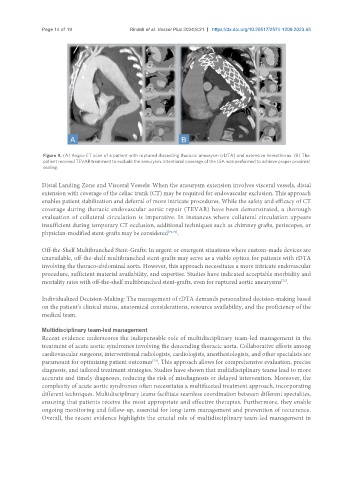
                Figure 9. (A) Angio-CT scan of a patient with ruptured dissecting thoracic aneurysm (rDTA) and extensive hemothorax. (B) The
                patient received TEVAR treatment to exclude the aneurysm. Intentional coverage of the LSA was performed to achieve proper proximal
                sealing.

               Distal Landing Zone and Visceral Vessels: When the aneurysm extension involves visceral vessels, distal
               extension with coverage of the celiac trunk (CT) may be required for endovascular exclusion. This approach
               enables patient stabilization and deferral of more intricate procedures. While the safety and efficacy of CT
               coverage during thoracic endovascular aortic repair (TEVAR) have been demonstrated, a thorough
               evaluation of collateral circulation is imperative. In instances where collateral circulation appears
               insufficient during temporary CT occlusion, additional techniques such as chimney grafts, periscopes, or
               physician-modified stent-grafts may be considered [70,71] .


               Off-the-Shelf Multibranched Stent-Grafts: In urgent or emergent situations where custom-made devices are
               unavailable, off-the-shelf multibranched stent-grafts may serve as a viable option for patients with rDTA
               involving the thoraco-abdominal aorta. However, this approach necessitates a more intricate endovascular
               procedure, sufficient material availability, and expertise. Studies have indicated acceptable morbidity and
                                                                                                [72]
               mortality rates with off-the-shelf multibranched stent-grafts, even for ruptured aortic aneurysms .

               Individualized Decision-Making: The management of rDTA demands personalized decision-making based
               on the patient's clinical status, anatomical considerations, resource availability, and the proficiency of the
               medical team.


               Multidisciplinary team-led management
               Recent evidence underscores the indispensable role of multidisciplinary team-led management in the
               treatment of acute aortic syndromes involving the descending thoracic aorta. Collaborative efforts among
               cardiovascular surgeons, interventional radiologists, cardiologists, anesthesiologists, and other specialists are
               paramount for optimizing patient outcomes . This approach allows for comprehensive evaluation, precise
                                                    [73]
               diagnosis, and tailored treatment strategies. Studies have shown that multidisciplinary teams lead to more
               accurate and timely diagnoses, reducing the risk of misdiagnosis or delayed intervention. Moreover, the
               complexity of acute aortic syndromes often necessitates a multifaceted treatment approach, incorporating
               different techniques. Multidisciplinary teams facilitate seamless coordination between different specialties,
               ensuring that patients receive the most appropriate and effective therapies. Furthermore, they enable
               ongoing monitoring and follow-up, essential for long-term management and prevention of recurrence.
               Overall, the recent evidence highlights the crucial role of multidisciplinary team-led management in

