


Page 60 - Read Online
P. 60
Page 4 of 19                  Rinaldi et al. Vessel Plus 2024;8:21  https://dx.doi.org/10.20517/2574-1209.2023.65

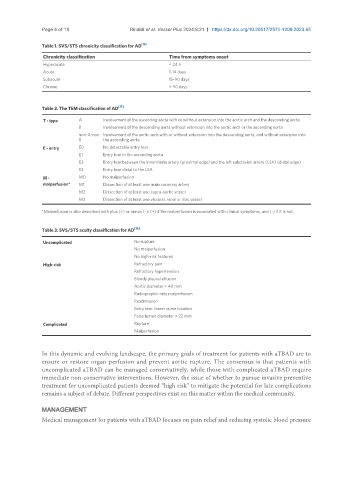
               Table 1. SVS/STS chronicity classification for AD [16]
                Chronicity classification                 Time from symptoms onset
                Hyperacute                                < 24 h
                Acute                                     1-14 days
                Subacute                                  15-90 days
                Chronic                                   > 90 days


               Table 2. The TEM classification of AD [17]

                T - type    A       Involvement of the ascending aorta with or without extension into the aortic arch and the descending aorta
                            B       Involvement of the descending aorta without extension into the aortic arch or the ascending aorta
                            non-A-non- Involvement of the aortic arch with or without extension into the descending aorta, and without extension into
                            B       the ascending aorta
                E - entry   E0      No detectable entry tear
                            E1      Entry tear in the ascending aorta
                            E2      Entry tear between the innominate artery (proximal edge) and the left subclavian artery (LSA) (distal edge)
                            E3      Entry tear distal to the LSA
                M -         M0      No malperfusion
                malperfusion*  M1   Dissection of at least one main coronary artery
                            M2      Dissection of at least one supra-aortic vessel
                            M3      Dissection of at least one visceral, renal or iliac vessel
               *Malperfusion is also described with plus (+) or minus (-): (+) if the malperfusion is associated with clinical symptoms, and (-) if it is not.


               Table 3. SVS/STS acuity classification for AD [16]
                Uncomplicated                 No rupture
                                              No malperfusion
                                              No high-risk features
                High-risk                     Refractory pain
                                              Refractory hypertension
                                              Bloody pleural effusion
                                              Aortic diameter > 40 mm
                                              Radiographic only malperfusion
                                              Readmission
                                              Entry tear: lesser curve location
                                              False lumen diameter > 22 mm
                Complicated                   Rupture
                                              Malperfusion


               In this dynamic and evolving landscape, the primary goals of treatment for patients with aTBAD are to
               ensure or restore organ perfusion and prevent aortic rupture. The consensus is that patients with
               uncomplicated aTBAD can be managed conservatively, while those with complicated aTBAD require
               immediate non-conservative interventions. However, the issue of whether to pursue invasive preventive
               treatment for uncomplicated patients deemed “high risk” to mitigate the potential for late complications
               remains a subject of debate. Different perspectives exist on this matter within the medical community.


               MANAGEMENT
               Medical management for patients with aTBAD focuses on pain relief and reducing systolic blood pressure

