


Page 14 - Read Online
P. 14
Chen et al. Soft Sci. 2026, 6, 3                                                 Page 11 of 26


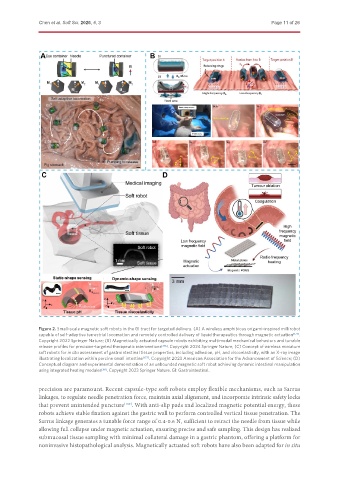
               Figure 2. Small-scale magnetic soft robots in the GI tract for targeted delivery. (A) A wireless amphibious origami-inspired millirobot
               capable of self-adaptive terrestrial locomotion and remotely controlled delivery of liquid therapeutics through magnetic actuation [173] .
               Copyright 2022 Springer Nature; (B) Magnetically actuated capsule robots exhibiting multimodal mechanical behaviors and tunable
               release profiles for precision-targeted therapeutic interventions [176] . Copyright 2024 Springer Nature; (C) Concept of wireless miniature
               soft robots for in situ assessment of gastrointestinal tissue properties, including adhesion, pH, and viscoelasticity, with an X-ray image
               illustrating localization within porcine small intestine [177] . Copyright 2023 American Association for the Advancement of Science; (D)
               Conceptual diagram and experimental demonstration of an unbounded magnetic soft robot achieving dynamic intestinal manipulation
               using integrated heating modules [181] . Copyright 2023 Springer Nature. GI: Gastrointestinal.


               precision are paramount. Recent capsule-type soft robots employ flexible mechanisms, such as Sarrus
               linkages, to regulate needle penetration force, maintain axial alignment, and incorporate intrinsic safety locks
               that prevent unintended puncture [180] . With anti-slip pads and localized magnetic potential energy, these
               robots achieve stable fixation against the gastric wall to perform controlled vertical tissue penetration. The
               Sarrus linkage generates a tunable force range of 0.4-0.6 N, sufficient to retract the needle from tissue while
               allowing full collapse under magnetic actuation, ensuring precise and safe sampling. This design has realized
               submucosal tissue sampling with minimal collateral damage in a gastric phantom, offering a platform for
               noninvasive histopathological analysis. Magnetically actuated soft robots have also been adapted for in situ

