


Page 12 - Read Online
P. 12
Chen et al. Soft Sci. 2026, 6, 3                             Page 9 of 26


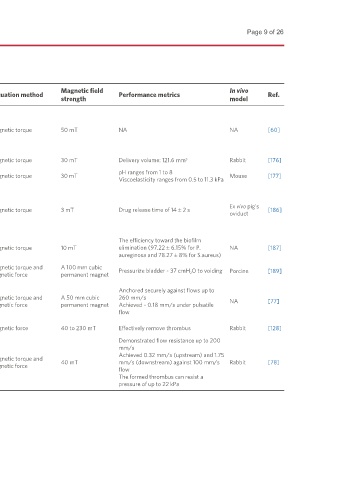
 Table 2. Summary of representative works in terms of different organ systems
 Environmental  Magnetic field                            In vivo
 Organ system  Typical materials  Robot size  Actuation method  Performance metrics  Ref.
 characteristics  strength                                model
 Elastic modulus: 1-10 kPa;
 Intestine: 20-40 kPa
 Intestine diameter: 2.5-3.8 cm
 Gastrointestinal tract  Ecoflex/PDMS + NdFeB  Sub-millimeter Magnetic torque  50 mT  NA  NA  [60]
 pH: Esophagus: 5-7
 Stomach: 1-4
 Intestine: 6.5-7
 PDMS + NdFeB  Centimeter  Magnetic torque  30 mT  Delivery volume: 121.6 mm 3  Rabbit  [176]
                              pH ranges from 1 to 8
 Ecoflex + NdFeB  Millimeter  Magnetic torque  30 mT      Mouse     [177]
                              Viscoelasticity ranges from 0.5 to 11.3 kPa
 Bladder tissue’s Young’s
 modulus: 315.05 ± 49.64 kPa
 Urinary and  horizontally and 283.62 ±                   Ex vivo pig’s
 reproductive systems  57.04 kPa vertically  Ecoflex/Hydrogel + NdFeB  Millimeter  Magnetic torque  3 mT  Drug release time of 14 ± 2 s  oviduct  [186]
 Diameter of the oviduct: 1-4
 mm
                              The efficiency toward the biofilm
 Silicone elastomer + Co
 nanowire  Millimeter  Magnetic torque  10 mT  elimination (97.22 ± 6.15% for P.  NA  [187]
                              aureginosa and 78.27 ± 8% for S.aureus)
 Magnetic torque and  A 100 mm cubic
 Ecoflex + NdFeB  Centimeter  Pressurize bladder ~ 37 cmH 2 O to voiding  Porcine  [189]
 magnetic force  permanent magnet
 Diameters: 1-4 mm            Anchored securely against flows up to
 Dynamic viscosity: 4.4 cP  Magnetic torque and  A 50 mm cubic  260 mm/s
 Vascular system  Average flow speed: 11.3 cm/s  PDMS + NdFeB  Millimeter  magnetic force  permanent magnet  Achieved ~ 0.18 mm/s under pulsatile  NA  [77]
 to 25.5 cm/s                 flow
 Young’s modulus: 1-3 MPa
 Millimeter  Magnetic force  40 to 230 mT  Effectively remove thrombus  Rabbit  [128]
 Silicone oil + Fe 3 O 4
                              Demonstrated flow resistance up to 200
                              mm/s
                              Achieved 0.32 mm/s (upstream) and 1.75
 Thermoplastic elastomer +  Magnetic torque and
 NdFeB  Millimeter  magnetic force  40 mT  mm/s (downstream) against 100 mm/s  Rabbit  [78]
                              flow
                              The formed thrombus can resist a
                              pressure of up to 22 kPa
 NA: Not available.

