


Page 77 - Read Online
P. 77
Page 26 of 34                            Yan et al. Soft Sci. 2025, 5, 8  https://dx.doi.org/10.20517/ss.2024.66


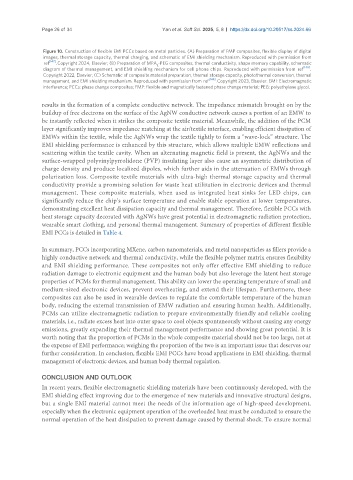
                Figure 10. Construction of flexible EMI PCCs based on metal particles. (A) Preparation of FMP composites, flexible display of digital
                images, thermal storage capacity, thermal charging, and schematic of EMI shielding mechanism. Reproduced with permission from
                ref [147] . Copyright 2024, Elsevier; (B) Preparation of MPA -PEG composites, thermal conductivity, shape memory capability, schematic
                                                      χ
                diagram of thermal management, and EMI shielding mechanism for cell phone chips. Reproduced with permission from  ref [148] .
                Copyright 2022, Elsevier; (C) Schematic of composite material preparation, thermal storage capacity, photothermal conversion, thermal
                management, and EMI shielding mechanism. Reproduced with permission from ref [149] . Copyright 2023, Elsevier. EMI: Electromagnetic
                interference; PCCs: phase change composites; FMP: flexible and magnetically fastened phase change material; PEG: polyethylene glycol.

               results in the formation of a complete conductive network. The impedance mismatch brought on by the
               buildup of free electrons on the surface of the AgNW conductive network causes a portion of an EMW to
               be instantly reflected when it strikes the composite textile material. Meanwhile, the addition of the PCM
               layer significantly improves impedance matching at the air/textile interface, enabling efficient dissipation of
               EMWs within the textile, while the AgNWs wrap the textile tightly to form a “wave-lock” structure. The
               EMI shielding performance is enhanced by this structure, which allows multiple EMW reflections and
               scattering within the textile cavity. When an alternating magnetic field is present, the AgNWs and the
               surface-wrapped polyvinylpyrrolidone (PVP) insulating layer also cause an asymmetric distribution of
               charge density and produce localized dipoles, which further aids in the attenuation of EMWs through
               polarization loss. Composite textile materials with ultra-high thermal storage capacity and thermal
               conductivity provide a promising solution for waste heat utilization in electronic devices and thermal
               management. These composite materials, when used as integrated heat sinks for LED chips, can
               significantly reduce the chip’s surface temperature and enable stable operation at lower temperatures,
               demonstrating excellent heat dissipation capacity and thermal management. Therefore, flexible PCCs with
               heat storage capacity decorated with AgNWs have great potential in electromagnetic radiation protection,
               wearable smart clothing, and personal thermal management. Summary of properties of different flexible
               EMI PCCs is detailed in Table 4.


               In summary, PCCs incorporating MXene, carbon nanomaterials, and metal nanoparticles as fillers provide a
               highly conductive network and thermal conductivity, while the flexible polymer matrix ensures flexibility
               and EMI shielding performance. These composites not only offer effective EMI shielding to reduce
               radiation damage to electronic equipment and the human body but also leverage the latent heat storage
               properties of PCMs for thermal management. This ability can lower the operating temperature of small and
               medium-sized electronic devices, prevent overheating, and extend their lifespan. Furthermore, these
               composites can also be used in wearable devices to regulate the comfortable temperature of the human
               body, reducing the external transmission of EMW radiation and ensuring human health. Additionally,
               PCMs can utilize electromagnetic radiation to prepare environmentally friendly and reliable cooling
               materials, i.e., radiate excess heat into outer space to cool objects spontaneously without causing any energy
               emissions, greatly expanding their thermal management performance and showing great potential. It is
               worth noting that the proportion of PCMs in the whole composite material should not be too large, not at
               the expense of EMI performance; weighing the proportion of the two is an important issue that deserves our
               further consideration. In conclusion, flexible EMI PCCs have broad applications in EMI shielding, thermal
               management of electronic devices, and human body thermal regulation.


               CONCLUSION AND OUTLOOK
               In recent years, flexible electromagnetic shielding materials have been continuously developed, with the
               EMI shielding effect improving due to the emergence of new materials and innovative structural designs,
               but a single EMI material cannot meet the needs of the information age of high-speed development,
               especially when the electronic equipment operation of the overloaded heat must be conducted to ensure the
               normal operation of the heat dissipation to prevent damage caused by thermal shock. To ensure normal

