


Page 66 - Read Online
P. 66
Yan et al. Soft Sci. 2025, 5, 8  https://dx.doi.org/10.20517/ss.2024.66         Page 15 of 34


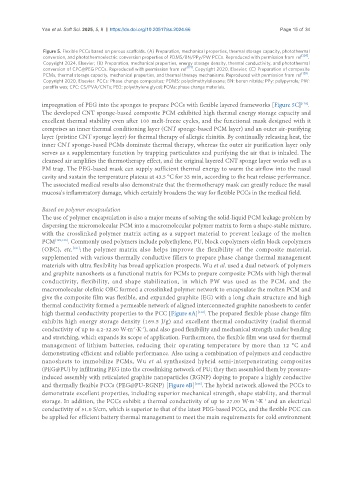
                Figure 5. Flexible PCCs based on porous scaffolds. (A) Preparation, mechanical properties, thermal storage capacity, photothermal
                conversion, and photothermoelectric conversion properties of PDMS/BN/PPy/PW PCCs. Reproduced with permission from  ref [126] .
                Copyright 2024, Elsevier; (B) Preparation, mechanical properties, energy storage density, thermal conductivity, and photothermal
                conversion of CPC@PEG PCCs. Reproduced with permission from  ref [127] . Copyright 2020, Elsevier; (C) Preparation of composite
                PCMs, thermal storage capacity, mechanical properties, and thermal therapy mechanisms. Reproduced with permission from  ref [128] .
                Copyright 2020, Elsevier. PCCs: Phase change composites; PDMS: polydimethylsiloxane; BN: boron nitride; PPy: polypyrrole; PW:
                paraffin wax; CPC: CS/PVA/CNTs; PEG: polyethylene glycol; PCMs: phase change materials.

               impregnation of PEG into the sponges to prepare PCCs with flexible layered frameworks [Figure 5C] .
                                                                                                      [128]
               The developed CNT sponge-based composite PCM exhibited high thermal energy storage capacity and
               excellent thermal stability even after 100 melt-freeze cycles, and the functional mask designed with it
               comprises an inner thermal conditioning layer (CNT sponge-based PCM layer) and an outer air-purifying
               layer (pristine CNT sponge layer) for thermal therapy of allergic rhinitis. By continually releasing heat, the
               inner CNT sponge-based PCMs dominate thermal therapy, whereas the outer air purification layer only
               serves as a supplementary function by trapping particulates and purifying the air that is inhaled. The
               cleansed air amplifies the thermotherapy effect, and the original layered CNT sponge layer works well as a
               PM trap. The PEG-based mask can supply sufficient thermal energy to warm the airflow into the nasal
               cavity and sustain the temperature plateau at 43.5 °C for 33 min, according to the heat release performance.
               The associated medical results also demonstrate that the thermotherapy mask can greatly reduce the nasal
               mucosa’s inflammatory damage, which certainly broadens the way for flexible PCCs in the medical field.

               Based on polymer encapsulation
               The use of polymer encapsulation is also a major means of solving the solid-liquid PCM leakage problem by
               dispersing the micromolecular PCM into a macromolecular polymer matrix to form a shape-stable mixture,
               with the crosslinked polymer matrix acting as a support material to prevent leakage of the molten
               PCM  [129,130] . Commonly used polymers include polyethylene, PU, block copolymers olefin block copolymers
               (OBC),  etc. ; the  polymer  matrix  also  helps  improve  the  flexibility  of  the  composite  material,
                         [131]
               supplemented with various thermally conductive fillers to prepare phase change thermal management
               materials with ultra flexibility has broad application prospects. Wu et al. used a dual network of polymers
               and graphite nanosheets as a functional matrix for PCMs to prepare composite PCMs with high thermal
               conductivity,  flexibility,  and  shape  stabilization,  in  which  PW  was  used  as  the  PCM,  and  the
               macromolecular olefinic OBC formed a crosslinked polymer network to encapsulate the molten PCM and
               give the composite film was flexible, and expanded graphite (EG) with a long chain structure and high
               thermal conductivity formed a permeable network of aligned interconnected graphite nanosheets to confer
               high thermal conductivity properties to the PCC [Figure 6A] . The prepared flexible phase change film
                                                                    [132]
               exhibits high energy storage density (169.5 J/g) and excellent thermal conductivity (radial thermal
                                              -1
                                                 -1
               conductivity of up to 4.2-32.80 W·m ·K ), and also good flexibility and mechanical strength under bending
               and stretching, which expands its scope of application. Furthermore, the flexible film was used for thermal
               management of lithium batteries, reducing their operating temperature by more than 12 °C and
               demonstrating efficient and reliable performance. Also using a combination of polymers and conductive
               nanosheets to immobilize PCMs, Wu et al. synthesized hybrid semi-interpenetrating composites
               (PEG@PU) by infiltrating PEG into the crosslinking network of PU; they then assembled them by pressure-
               induced assembly with reticulated graphite nanoparticles (RGNP) doping to prepare a highly conductive
                                                                   [133]
               and thermally flexible PCCs (PEG@PU-RGNP) [Figure 6B] . The hybrid network allowed the PCCs to
               demonstrate excellent properties, including superior mechanical strength, shape stability, and thermal
                                                                                       -1
                                                                                          -1
               storage. In addition, the PCCs exhibit a thermal conductivity of up to 27.00 W·m ·K  and an electrical
               conductivity of 51.0 S/cm, which is superior to that of the latest PEG-based PCCs, and the flexible PCC can
               be applied for efficient battery thermal management to meet the main requirements for cold environment

