


Page 32 - Read Online
P. 32
Zhang et al. Soft Sci 2024;4:39  https://dx.doi.org/10.20517/ss.2024.34          Page 3 of 28


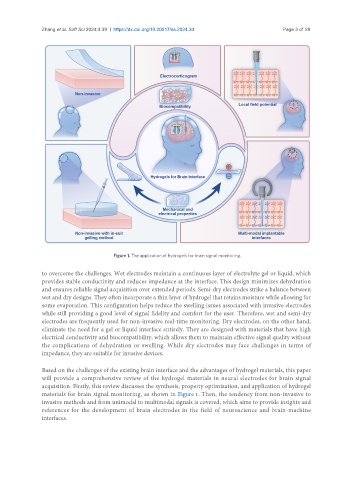
                                       Figure 1. The application of hydrogels for brain signal monitoring.


               to overcome the challenges. Wet electrodes maintain a continuous layer of electrolyte gel or liquid, which
               provides stable conductivity and reduces impedance at the interface. This design minimizes dehydration
               and ensures reliable signal acquisition over extended periods. Semi-dry electrodes strike a balance between
               wet and dry designs. They often incorporate a thin layer of hydrogel that retains moisture while allowing for
               some evaporation. This configuration helps reduce the swelling issues associated with invasive electrodes
               while still providing a good level of signal fidelity and comfort for the user. Therefore, wet and semi-dry
               electrodes are frequently used for non-invasive real-time monitoring. Dry electrodes, on the other hand,
               eliminate the need for a gel or liquid interface entirely. They are designed with materials that have high
               electrical conductivity and biocompatibility, which allows them to maintain effective signal quality without
               the complications of dehydration or swelling. While dry electrodes may face challenges in terms of
               impedance, they are suitable for invasive devices.

               Based on the challenges of the existing brain interface and the advantages of hydrogel materials, this paper
               will provide a comprehensive review of the hydrogel materials in neural electrodes for brain signal
               acquisition. Firstly, this review discusses the synthesis, property optimization, and application of hydrogel
               materials for brain signal monitoring, as shown in Figure 1. Then, the tendency from non-invasive to
               invasive methods and from unimodal to multimodal signals is covered, which aims to provide insights and
               references for the development of brain electrodes in the field of neuroscience and brain-machine
               interfaces.

