


Page 19 - Read Online
P. 19
He et al. Soft Sci 2024;4:37  https://dx.doi.org/10.20517/ss.2024.32            Page 17 of 27


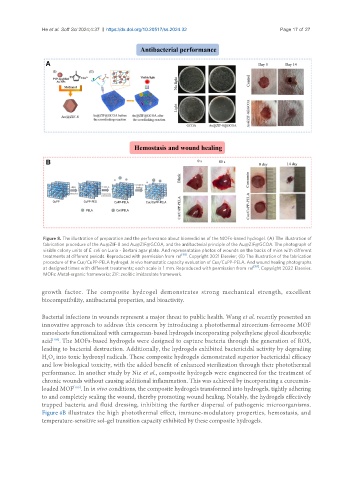
                Figure 8. The illustration of preparation and the performance about biomedicine of the MOFs-based hydrogel. (A) The illustration of
                fabrication procedure of the Au@ZIF-8 and Au@ZIF@GCOA, and the antibacterial principle of the Au@ZIF@GCOA. The photograph of
                visible colony units of E. coli on Luria - Bertani agar plate. And representative photos of wounds on the backs of mice with different
                treatments at different periods. Reproduced with permission from ref [98] . Copyright 2021 Elsevier; (B) The illustration of the fabrication
                procedure of the Cur/CuPP-PELA hydrogel. In vivo hemostatic capacity evaluation of Cur/CuPP-PELA. And wound healing photographs
                at designed times with different treatments; each scale is 1 mm. Reproduced with permission from  ref [99] . Copyright 2022 Elsevier.
                MOFs: Metal-organic frameworks; ZIF: zeolitic imidazolate framework.


               growth  factor.  The  composite  hydrogel  demonstrates  strong  mechanical  strength,  excellent
               biocompatibility, antibacterial properties, and bioactivity.


               Bacterial infections in wounds represent a major threat to public health. Wang et al. recently presented an
               innovative approach to address this concern by introducing a photothermal zirconium-ferrocene MOF
               nanosheets functionalized with carrageenan-based hydrogels incorporating polyethylene glycol dicarboxylic
               acid . The MOFs-based hydrogels were designed to capture bacteria through the generation of ROS,
                   [108]
               leading to bacterial destruction. Additionally, the hydrogels exhibited bactericidal activity by degrading
               H O  into toxic hydroxyl radicals. These composite hydrogels demonstrated superior bactericidal efficacy
                   2
                 2
               and low biological toxicity, with the added benefit of enhanced sterilization through their photothermal
               performance. In another study by Nie et al., composite hydrogels were engineered for the treatment of
               chronic wounds without causing additional inflammation. This was achieved by incorporating a curcumin-
               loaded MOF . In in vivo conditions, the composite hydrogels transformed into hydrogels, tightly adhering
                          [109]
               to and completely sealing the wound, thereby promoting wound healing. Notably, the hydrogels effectively
               trapped bacteria and fluid dressing, inhibiting the further dispersal of pathogenic microorganisms.
               Figure 8B illustrates the high photothermal effect, immune-modulatory properties, hemostasis, and
               temperature-sensitive sol–gel transition capacity exhibited by these composite hydrogels.

