


Page 11 - Read Online
P. 11
Huang et al. Soft Sci 2024;4:40  https://dx.doi.org/10.20517/ss.2024.37          Page 9 of 35


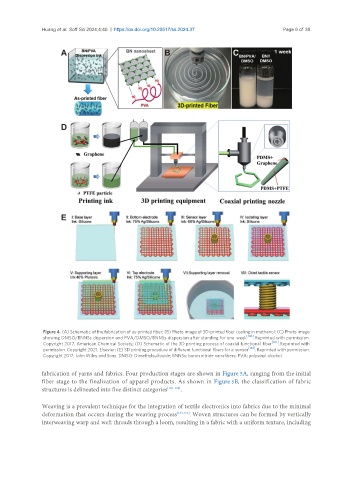
                Figure 4. (A) Schematic of the fabrication of as-printed fiber; (B) Photo image of 3D-printed fiber cooling in methanol; (C) Photo image
                showing DMSO/BNNSs dispersion and PVA/DMSO/BNNSs dispersion after standing for one  week [146] . Reprinted with permission.
                Copyright 2017, American Chemical Society; (D) Schematic of the 3D printing process of coaxial functional  fiber [147] . Reprinted with
                permission. Copyright 2021, Elsevier; (E) 3D printing procedure of different functional fibers for a sensor [148] . Reprinted with permission.
                Copyright 2017, John Wiley and Sons. DMSO: Dimethylsulfoxide; BNNSs: boron nitride nanofibers; PVA: polyvinyl alcohol.


               fabrication of yarns and fabrics. Four production stages are shown in Figure 5A, ranging from the initial
               fiber stage to the finalization of apparel products. As shown in Figure 5B, the classification of fabric
               structures is delineated into five distinct categories [150-153] .


               Weaving is a prevalent technique for the integration of textile electronics into fabrics due to the minimal
               deformation that occurs during the weaving process [154,155] . Woven structures can be formed by vertically
               interweaving warp and weft threads through a loom, resulting in a fabric with a uniform texture, including

