


Page 93 - Read Online
P. 93
Kim et al. Soft Sci 2024;4:24  https://dx.doi.org/10.20517/ss.2024.09           Page 19 of 27


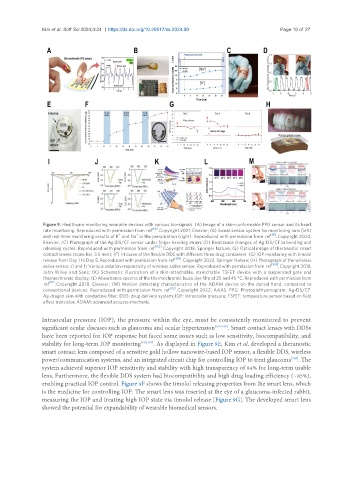
                Figure 9. Healthcare monitoring wearable devices with various bio-signals. (A) Image of a skin-conformable PPG sensor and its heart
                rate monitoring. Reproduced with permission from ref [89] . Copyright 2021, Elsevier; (B) Sweat sensor system for monitoring ions (left)
                                         +
                                               +
                and real-time monitoring results of K  and Na  in the perspiration (right). Reproduced with permission from  ref [95] . Copyright 2020,
                Elsevier; (C) Photograph of the Ag-DS/CF sensor under finger bending strain; (D) Resistance changes of Ag-DS/CF in bending and
                releasing cycles. Reproduced with permission from  ref [102] . Copyright 2018, Springer Nature; (E) Optical image of theranostic smart
                contact lenses (scale bar, 5.5 mm); (F) I-t curve of the flexible DDS with different three drug containers. (G) IOP monitoring with timolol
                release from Day 1 to Day 5. Reproduced with permission from ref [108] . Copyright 2022, Springer Nature; (H) Photograph of the wireless
                saliva sensor; (I and J) Various solution responsivity of wireless saliva sensor. Reproduced with permission from ref [109] . Copyright 2018,
                John Wiley and Sons; (K) Schematic illustration of a skin-attachable, stretchable TSFET device with a suspended gate and
                thermochromic display; (L) Absorbance spectra of the thermochromic leuco dye film at 25 and 45 °C. Reproduced with permission from
                ref [111] . Copyright 2018, Elsevier; (M) Motion detecting characteristics of the ADAM device on the dorsal hand, compared to
                conventional devices. Reproduced with permission from  ref [112] . Copyright 2022, AAAS. PPG: Photoplethysmogram; Ag-DS/CF:
                Ag-dragon skin with conductive fiber; DDS: drug delivery system; IOP: intraocular pressure; TSFET: temperature sensor based on field
                effect transistor; ADAM: advanced acousto-mechanic.

               Intraocular pressure (IOP), the pressure within the eye, must be consistently monitored to prevent
               significant ocular diseases such as glaucoma and ocular hypertension [103-105] . Smart contact lenses with DDSs
               have been reported for IOP response but faced some issues such as low sensitivity, biocompatibility, and
               stability for long-term IOP monitoring [106,107] . As displayed in Figure 9E, Kim et al. developed a theranostic
               smart contact lens composed of a sensitive gold hollow nanowire-based IOP sensor, a flexible DDS, wireless
               power/communication systems, and an integrated circuit chip for controlling IOP to treat glaucoma . The
                                                                                                   [108]
               system achieved superior IOP sensitivity and stability with high transparency of 84% for long-term usable
               lens. Furthermore, the flexible DDS system had biocompatibility and high drug loading efficiency (~85%),
               enabling practical IOP control. Figure 9F shows the timolol releasing properties from the smart lens, which
               is the medicine for controlling IOP. The smart lens was inserted at the eye of a glaucoma-infected rabbit,
               measuring the IOP and treating high IOP state via timolol release [Figure 9G]. The developed smart lens
               showed the potential for expandability of wearable biomedical sensors.

