


Page 77 - Read Online
P. 77
Kim et al. Soft Sci 2024;4:24  https://dx.doi.org/10.20517/ss.2024.09            Page 3 of 27


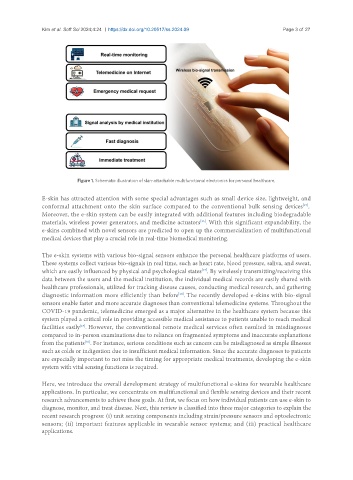
                           Figure 1. Schematic illustration of skin-attachable multifunctional electronics for personal healthcare.

               E-skin has attracted attention with some special advantages such as small device size, lightweight, and
                                                                                                       [15]
               conformal attachment onto the skin surface compared to the conventional bulk sensing devices .
               Moreover, the e-skin system can be easily integrated with additional features including biodegradable
                                                                     [16]
               materials, wireless power generators, and medicine actuators . With this significant expandability, the
               e-skins combined with novel sensors are predicted to open up the commercialization of multifunctional
               medical devices that play a crucial role in real-time biomedical monitoring.


               The e-skin systems with various bio-signal sensors enhance the personal healthcare platforms of users.
               These systems collect various bio-signals in real time, such as heart rate, blood pressure, saliva, and sweat,
                                                                     [17]
               which are easily influenced by physical and psychological states . By wirelessly transmitting/receiving this
               data between the users and the medical institution, the individual medical records are easily shared with
               healthcare professionals, utilized for tracking disease causes, conducting medical research, and gathering
               diagnostic information more efficiently than before . The recently developed e-skins with bio-signal
                                                             [18]
               sensors enable faster and more accurate diagnoses than conventional telemedicine systems. Throughout the
               COVID-19 pandemic, telemedicine emerged as a major alternative in the healthcare system because this
               system played a critical role in providing accessible medical assistance to patients unable to reach medical
                            [19]
               facilities easily . However, the conventional remote medical services often resulted in misdiagnoses
               compared to in-person examinations due to reliance on fragmented symptoms and inaccurate explanations
                              [20]
               from the patients . For instance, serious conditions such as cancers can be misdiagnosed as simple illnesses
               such as colds or indigestion due to insufficient medical information. Since the accurate diagnoses to patients
               are especially important to not miss the timing for appropriate medical treatments, developing the e-skin
               system with vital sensing functions is required.


               Here, we introduce the overall development strategy of multifunctional e-skins for wearable healthcare
               applications. In particular, we concentrate on multifunctional and flexible sensing devices and their recent
               research advancements to achieve these goals. At first, we focus on how individual patients can use e-skin to
               diagnose, monitor, and treat disease. Next, this review is classified into three major categories to explain the
               recent research progress: (i) unit sensing components including strain/pressure sensors and optoelectronic
               sensors; (ii) important features applicable in wearable sensor systems; and (iii) practical healthcare
               applications.

