


Page 5 - Read Online
P. 5
Kim et al. Soft Sci 2024;4:12  https://dx.doi.org/10.20517/ss.2023.50            Page 3 of 11

               Table 1. Current state-of-art computer vision techniques used in soft electronics
                                               Fiducial  Frame of         Processing  Resolution E.g., in soft
                                                                                           *
                Category  Applications Key outputs            Dimensionality                           Ref.
                                               points  reference          time              electronics
                Particle image  Fluid flow  Velocity vorticity Yes  Eulerian  2D  Long  High  Respiratory   [10]
                velocimetry                                                                 sensors
                Particle   Fluid flow   Velocity   Yes  Lagrangian 2D, 3D   Intermediate High (2D),   Drug delivery   [23]
                tracking   object tracking trajectory         (Volumetric)  (2D), long  medium   systems
                velocimetry                                               (3D)     (3D)
                Digital image  Solid   Deformation   Yes  Eulerian  2D, 3D   Short (2D),  High (2D),   Haptic   [25]
                correlation  deformation  strain      lagrangian  (Stereoscopic)  intermediate high (3D)  systems strain
                                                                          (3D)              sensors
                Eulerian video  Visual   Spatiotemporally  No  N/A  2D    Short    Qualitative  Cardiac   [18]
                magnification enhancement  amplified video                                  sensors
                Structure   3D geometry   3D volumetric   No  N/A  3D     Intermediate Qualitative  3D buckled   [19]
                from motion  estimation  image                (Volumetric)                  electronics
                Area tracking Solid   Deformation  No  Lagrangian 2D      Intermediate Low to  Organoid   [20]
                         deformation                                               medium   sensors
                Markerless   Object   Trajectory  No  Lagrangian 2D, 3D   Intermediate Low (2D,   Biomechanical  [17]
                pose     tracking                             (Volumetric)  (2D), long  3D)  sensors
                estimation                                                (3D)
               *            3  3         2    2
                Typically, High > 10 , 10  > Medium > 10 , and 10  > Low in data points. 3D: Three-dimensional.


                                                                                       [8]
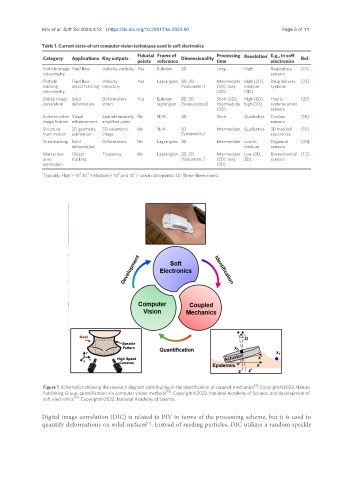
                Figure 1. Schematics showing the research diagram contributing to the identification of coupled mechanics . Copyright©2022, Nature
                                                         [10]
                Publishing Group, quantification via computer vision methods  . Copyright©2022, National Academy of Science, and development of
                          [10]
                soft electronics  . Copyright©2022, National Academy of Science.
               Digital image correlation (DIC) is related to PIV in terms of the processing scheme, but it is used to
                                                  [11]
               quantify deformations on solid surfaces . Instead of seeding particles, DIC utilizes a random speckle

