


Page 6 - Read Online
P. 6
Page 4 of 12                            Peng et al. Soft Sci 2023;3:36  https://dx.doi.org/10.20517/ss.2023.28


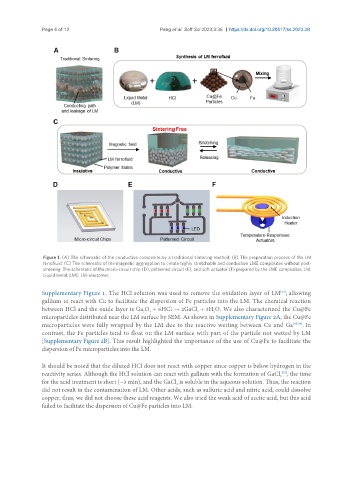
                Figure 1. (A) The schematic of the conductive composite by a traditional sintering method; (B) The preparation process of the LM
                ferrofluid; (C) The schematic of the magnetic aggregation to create highly stretchable and conductive LME composites without post-
                sintering. The schematic of the micro-circuit chip (D), patterned circuit (E), and soft actuator (F) prepared by the LME composites. LM:
                Liquid metal; LME: LM-elastomer.

                                                                                                [34]
               Supplementary Figure 1. The HCl solution was used to remove the oxidation layer of LM , allowing
               gallium to react with Cu to facilitate the dispersion of Fe particles into the LM. The chemical reaction
               between HCl and the oxide layer is Ga O  + 6HCl → 2GaCl  + 3H O. We also characterized the Cu@Fe
                                                   3
                                                 2
                                                                         2
                                                                   3
               microparticles distributed near the LM surface by SEM. As shown in Supplementary Figure 2A, the Cu@Fe
               microparticles were fully wrapped by the LM due to the reactive wetting between Cu and Ga [35,36] . In
               contrast, the Fe particles tend to float on the LM surface with part of the particle not wetted by LM
               [Supplementary Figure 2B]. This result highlighted the importance of the use of Cu@Fe to facilitate the
               dispersion of Fe microparticles into the LM.

               It should be noted that the diluted HCl does not react with copper since copper is below hydrogen in the
               reactivity series. Although the HCl solution can react with gallium with the formation of GaCl , the time
                                                                                                [37]
                                                                                               3
               for the acid treatment is short (~3 min), and the GaCl  is soluble in the aqueous solution. Thus, the reaction
                                                            3
               did not result in the contamination of LM. Other acids, such as sulfuric acid and nitric acid, could dissolve
               copper; thus, we did not choose these acid reagents. We also tried the weak acid of acetic acid, but this acid
               failed to facilitate the dispersion of Cu@Fe particles into LM.

