


Page 11 - Read Online
P. 11
Peng et al. Soft Sci 2023;3:36  https://dx.doi.org/10.20517/ss.2023.28           Page 9 of 12


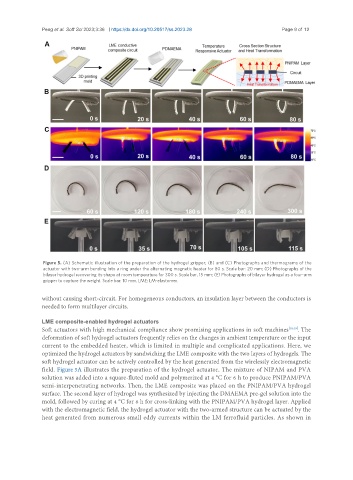
                Figure 5. (A) Schematic illustration of the preparation of the hydrogel gripper; (B) and (C) Photographs and thermograms of the
                actuator with two-arm bending into a ring under the alternating magnetic heater for 80 s. Scale bar: 20 mm; (D) Photographs of the
                bilayer hydrogel recovering its shape at room temperature for 300 s. Scale bar, 15 mm; (E) Photographs of bilayer hydrogel as a four-arm
                gripper to capture the weight. Scale bar: 10 mm. LME: LM-elastomer.

               without causing short-circuit. For homogeneous conductors, an insulation layer between the conductors is
               needed to form multilayer circuits.

               LME composite-enabled hydrogel actuators
               Soft actuators with high mechanical compliance show promising applications in soft machines [38,39] . The
               deformation of soft hydrogel actuators frequently relies on the changes in ambient temperature or the input
               current to the embedded heater, which is limited in multiple and complicated applications. Here, we
               optimized the hydrogel actuators by sandwiching the LME composite with the two layers of hydrogels. The
               soft hydrogel actuator can be actively controlled by the heat generated from the wirelessly electromagnetic
               field. Figure 5A illustrates the preparation of the hydrogel actuator. The mixture of NIPAM and PVA
               solution was added into a square-fluted mold and polymerized at 4 °C for 6 h to produce PNIPAM/PVA
               semi-interpenetrating networks. Then, the LME composite was placed on the PNIPAM/PVA hydrogel
               surface. The second layer of hydrogel was synthesized by injecting the DMAEMA pre-gel solution into the
               mold, followed by curing at 4 °C for 6 h for cross-linking with the PNIPAM/PVA hydrogel layer. Applied
               with the electromagnetic field, the hydrogel actuator with the two-armed structure can be actuated by the
               heat generated from numerous small eddy currents within the LM ferrofluid particles. As shown in

