


Page 37 - Read Online
P. 37
Bai et al. Soft Sci 2023;3:40  https://dx.doi.org/10.20517/ss.2023.38             Page 3 of 34


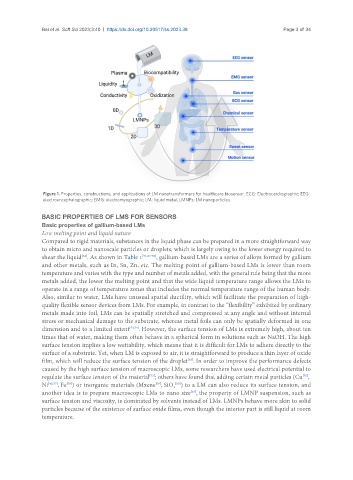
                Figure 1. Properties, constructions, and applications of LM nanotransformers for healthcare biosensor. ECG: Electrocardiographic; EEG:
                electroencephalographic; EMG: electromyographic; LM: liquid metal; LMNPs: LM nanoparticles.

               BASIC PROPERTIES OF LMS FOR SENSORS
               Basic properties of gallium-based LMs
               Low melting point and liquid nature
               Compared to rigid materials, substances in the liquid phase can be prepared in a more straightforward way
               to obtain micro and nanoscale particles or droplets, which is largely owing to the lower energy required to
               shear the liquid . As shown in Table 1 [51,63-72] , gallium-based LMs are a series of alloys formed by gallium
                             [62]
               and other metals, such as In, Sn, Zn, etc. The melting point of gallium-based LMs is lower than room
               temperature and varies with the type and number of metals added, with the general rule being that the more
               metals added, the lower the melting point and that the wide liquid temperature range allows the LMs to
               operate in a range of temperature zones that includes the normal temperature range of the human body.
               Also, similar to water, LMs have unusual spatial ductility, which will facilitate the preparation of high-
               quality flexible sensor devices from LMs. For example, in contrast to the “flexibility” exhibited by ordinary
               metals made into foil, LMs can be spatially stretched and compressed at any angle and without internal
               stress or mechanical damage to the substrate, whereas metal foils can only be spatially deformed in one
               dimension and to a limited extent [73,74] . However, the surface tension of LMs is extremely high, about ten
               times that of water, making them often behave in a spherical form in solutions such as NaOH. The high
               surface tension implies a low wettability, which means that it is difficult for LMs to adhere directly to the
               surface of a substrate. Yet, when LM is exposed to air, it is straightforward to produce a thin layer of oxide
                                                                [63]
               film, which will reduce the surface tension of the droplet . In order to improve the performance defects
               caused by the high surface tension of macroscopic LMs, some researchers have used electrical potential to
               regulate the surface tension of the material ; others have found that adding certain metal particles (Cu ,
                                                   [75]
                                                                                                       [76]
               Ni [40,77] , Fe ) or inorganic materials (Mxene , SiO ) to a LM can also reduce its surface tension, and
                                                            [80]
                                                     [79]
                       [78]
                                                            2
                                                                 [63]
               another idea is to prepare macroscopic LMs to nano size , the property of LMNP suspension, such as
               surface tension and viscosity, is dominated by solvents instead of LMs. LMNPs behave more akin to solid
               particles because of the existence of surface oxide films, even though the interior part is still liquid at room
               temperature.

