


Page 19 - Read Online
P. 19
Li et al. Soft Sci 2023;3:37  https://dx.doi.org/10.20517/ss.2023.30             Page 5 of 20


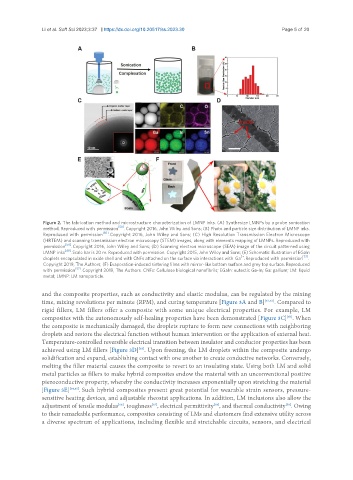
                Figure 2. The fabrication method and microstructure characterization of LMNP inks. (A) Synthesize LMNPs by a probe sonication
                                         [50]
                method. Reproduced with permission  . Copyright 2016, John Wiley and Sons; (B) Photo and particle size distribution of LMNP inks.
                                    [50]
                Reproduced with  permission  . Copyright 2016, John Wiley and Sons; (C) High Resolution Transmission Electron Microscope
                (HRTEM) and scanning transmission electron microscopy (STEM) images, along with elements mapping of LMNPs. Reproduced with
                       [50]
                permission  . Copyright 2016, John Wiley and Sons; (D) Scanning electron microscope (SEM) image of the circuit patterned using
                       [49]
                LMNP inks  . Scale bar is 20 m. Reproduced with permission. Copyright 2015, John Wiley and Sons; (E) Schematic illustration of EGaIn
                                                                                  3+                   [57]
                droplets encapsulated in oxide shell and with CNFs attached on the surface via interactions with Ga . Reproduced with permission  .
                Copyright 2019, The Authors; (F) Evaporation-induced sintering films with mirror-like bottom surface and grey top surface. Reproduced
                with permission [57] . Copyright 2019, The Authors. CNFs: Cellulose biological nanofibrils; EGaIn: eutectic Ga-In; Ga: gallium; LM: liquid
                metal; LMNP: LM nanoparticle.
               and the composite properties, such as conductivity and elastic modulus, can be regulated by the mixing
               time, mixing revolutions per minute (RPM), and curing temperature [Figure 3A and B] [61,62] . Compared to
               rigid fillers, LM fillers offer a composite with some unique electrical properties. For example, LM
               composites with the autonomously self-healing properties have been demonstrated [Figure 3C] . When
                                                                                                  [60]
               the composite is mechanically damaged, the droplets rupture to form new connections with neighboring
               droplets and restore the electrical function without human intervention or the application of external heat.
               Temperature-controlled reversible electrical transition between insulator and conductor properties has been
               achieved using LM fillers [Figure 3D] . Upon freezing, the LM droplets within the composite undergo
                                                [63]
               solidification and expand, establishing contact with one another to create conductive networks. Conversely,
               melting the filler material causes the composite to revert to an insulating state. Using both LM and solid
               metal particles as fillers to make hybrid composites endow the material with an unconventional positive
               piezoconductive property, whereby the conductivity increases exponentially upon stretching the material
               [ Figure 3E] [64,65] . Such hybrid composites present great potential for wearable strain sensors, pressure-
               sensitive heating devices, and adjustable rheostat applications. In addition, LM inclusions also allow the
                                                                         [68]
                                                                                                 [58]
                                                    [67]
                                         [66]
               adjustment of tensile modulus , toughness , electrical permittivity , and thermal conductivity . Owing
               to their remarkable performance, composites consisting of LMs and elastomers find extensive utility across
               a diverse spectrum of applications, including flexible and stretchable circuits, sensors, and electrical

