


Page 18 - Read Online
P. 18
Page 4 of 20                              Li et al. Soft Sci 2023;3:37  https://dx.doi.org/10.20517/ss.2023.30


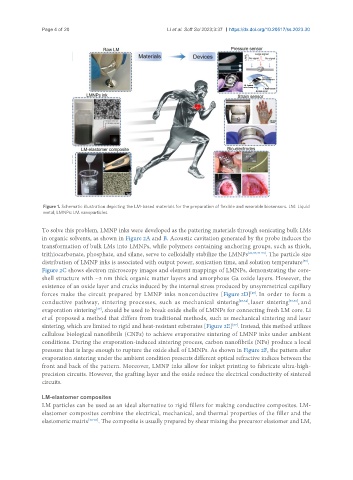
                Figure 1. Schematic illustration depicting the LM-based materials for the preparation of flexible and wearable biosensors. LM: Liquid
                metal; LMNPs: LM nanoparticles.


               To solve this problem, LMNP inks were developed as the pattering materials through sonicating bulk LMs
               in organic solvents, as shown in Figure 2A and B. Acoustic cavitation generated by the probe induces the
               transformation of bulk LMs into LMNPs, while polymers containing anchoring groups, such as thiols,
               trithiocarbonate, phosphate, and silane, serve to colloidally stabilize the LMNPs [20,37,49-53] . The particle size
               distribution of LMNP inks is associated with output power, sonication time, and solution temperature .
                                                                                                       [50]
               Figure 2C shows electron microscopy images and element mappings of LMNPs, demonstrating the core-
               shell structure with ~3 nm thick organic matter layers and amorphous Ga oxide layers. However, the
               existence of an oxide layer and cracks induced by the internal stress produced by unsymmetrical capillary
               forces make the circuit prepared by LMNP inks nonconductive [Figure 2D] . In order to form a
                                                                                     [49]
               conductive  pathway,  sintering  processes,  such  as  mechanical  sintering [49,54] , laser  sintering [55,56] , and
               evaporation sintering , should be used to break oxide shells of LMNPs for connecting fresh LM core. Li
                                 [37]
               et al. proposed a method that differs from traditional methods, such as mechanical sintering and laser
               sintering, which are limited to rigid and heat-resistant substrates [Figure 2E] . Instead, this method utilizes
                                                                               [57]
               cellulose biological nanofibrils (CNFs) to achieve evaporative sintering of LMNP inks under ambient
               conditions. During the evaporation-induced sintering process, carbon nanofibrils (NFs) produce a local
               pressure that is large enough to rupture the oxide shell of LMNPs. As shown in Figure 2F, the pattern after
               evaporation sintering under the ambient condition presents different optical refractive indices between the
               front and back of the pattern. Moreover, LMNP inks allow for inkjet printing to fabricate ultra-high-
               precision circuits. However, the grafting layer and the oxide reduce the electrical conductivity of sintered
               circuits.

               LM-elastomer composites
               LM particles can be used as an ideal alternative to rigid fillers for making conductive composites. LM-
               elastomer composites combine the electrical, mechanical, and thermal properties of the filler and the
               elastomeric matrix [58-60] . The composite is usually prepared by shear mixing the precursor elastomer and LM,

