


Page 70 - Read Online
P. 70
Du et al. Soft Sci 2024;4:35  https://dx.doi.org/10.20517/ss.2024.31             Page 13 of 23


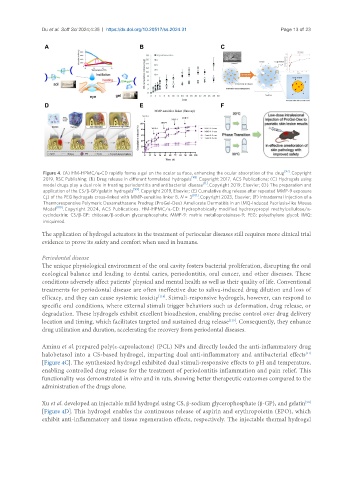
                Figure 4. (A) HM-HPMC/α-CD rapidly forms a gel on the ocular surface, enhancing the ocular absorption of the  drug [97] . Copyright
                2019, RSC Publishing; (B) Drug release in different formulated  hydrogels [98] . Copyright 2017, ACS Publications; (C) Hydrogels using
                                                                     [11]
                model drugs play a dual role in treating periodontitis and antibacterial  disease . Copyright 2019, Elsevier; (D) The preparation and
                application of the CS/β-GP/gelatin hydrogels [99] . Copyright 2019, Elsevier; (E) Cumulative drug release after repeated MMP-9 exposure
                (↓) of the PEG hydrogels cross-linked with MMP-sensitive linker B. N =  3 [101] . Copyright 2023, Elsevier; (F) Intradermal Injection of a
                Thermoresponsive Polymeric Dexamethasone Prodrug (ProGel-Dex) Ameliorate Dermatitis in an IMQ-Induced Psoriasis-like Mouse
                    [100]
                Model  . Copyright 2024, ACS Publications. HM-HPMC/α-CD: Hydrophobically modified hydroxypropyl methylcellulose/α-
                cyclodextrin;  CS/β-GP:  chitosan/β-sodium  glycerophosphate;  MMP-9:  matrix  metalloproteinase-9;  PEG:  polyethylene  glycol;  IMQ:
                imiquimod.
               The application of hydrogel actuators in the treatment of periocular diseases still requires more clinical trial
               evidence to prove its safety and comfort when used in humans.

               Periodontal disease
               The unique physiological environment of the oral cavity fosters bacterial proliferation, disrupting the oral
               ecological balance and leading to dental caries, periodontitis, oral cancer, and other diseases. These
               conditions adversely affect patients' physical and mental health as well as their quality of life. Conventional
               treatments for periodontal disease are often ineffective due to saliva-induced drug dilution and loss of
                                                      [114]
               efficacy, and they can cause systemic toxicity . Stimuli-responsive hydrogels, however, can respond to
               specific oral conditions, where external stimuli trigger behaviors such as deformation, drug release, or
               degradation. These hydrogels exhibit excellent bioadhesion, enabling precise control over drug delivery
               location and timing, which facilitates targeted and sustained drug release . Consequently, they enhance
                                                                              [115]
               drug utilization and duration, accelerating the recovery from periodontal diseases.

               Aminu et al. prepared poly(ε-caprolactone) (PCL) NPs and directly loaded the anti-inflammatory drug
               halobetasol into a CS-based hydrogel, imparting dual anti-inflammatory and antibacterial effects
                                                                                                        [11]
               [Figure 4C]. The synthesized hydrogel exhibited dual stimuli-responsive effects to pH and temperature,
               enabling controlled drug release for the treatment of periodontitis inflammation and pain relief. This
               functionality was demonstrated in vitro and in rats, showing better therapeutic outcomes compared to the
               administration of the drugs alone.


               Xu et al. developed an injectable mild hydrogel using CS, β-sodium glycerophosphate (β-GP), and gelatin
                                                                                                        [99]
               [Figure 4D]. This hydrogel enables the continuous release of aspirin and erythropoietin (EPO), which
               exhibit anti-inflammatory and tissue regeneration effects, respectively. The injectable thermal hydrogel

