


Page 68 - Read Online
P. 68
Du et al. Soft Sci 2024;4:35  https://dx.doi.org/10.20517/ss.2024.31             Page 11 of 23

               Table 2. The applications of hydrogel actuators in various diseases
                Disease type      Disease characteristics      Trigger conditions  Types of hydrogel  Ref.
                Wound healing     (1) Easy to produce          (1) Temperature   (1) Transdermal   [93,94]
                                  (2) Easy to develop complications  (2) Light  (2) Injection
                Diabetic wound healing  (1) Hard to heal       (1) pH           (1) Transdermal  [95,96]
                                  (2) Easy to infect           (2) pH/glucose
                                  (3) High-sugar wound environment
                Periocular disease  (1) Complex physiological structure   (1)Temperature  (1) Transdermal  [97,98]
                                  (2) Physiological factors restriction
                Periodontal disease  (1) Disruptive disease    (1) pH/temperature   (1) Transdermal   [11,99]
                                  (2) Oral environment restriction  (2) Temperature  (2) Injection
                Psoriasis         (1) Chronic, autoimmune skin disease   (1) Enzyme   (1) Transdermal   [100,101]
                                  (2) Complex pathogenesis     (2) Temperature  (2) Injection
                Cancer treatment  (1) High mortality           (1) Temperature   (1) Implantation  [91,102,103]
                                  (2) Difficult to treat       (2) pH
                                  (3) Easy to produce side effects  (3) Light
                Diabetes mellitus  (1) Chronic metabolic disease   (1) Glucose  (1) Implantation  [104,105]
                                  (2) Highly dependent on insulin
                Gastrointestinal disease  (1) High incidence   (1) pH           (1) Ingestion   [106,107]
                                  (2) Long disease course      (2) Enzyme
                                  (3) Harsh treatment environment


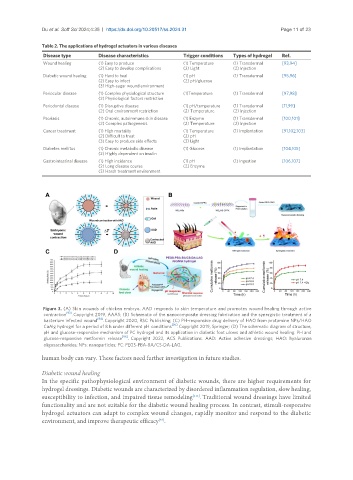
                Figure 3. (A) Skin wounds of chicken embryo. AAD responds to skin temperature and promotes wound healing through active
                contraction [93] . Copyright 2019, AAAS; (B) Schematic of the nanocomposite dressing fabrication and the synergistic treatment of a
                bacterium infected  wound [94] . Copyright 2020, RSC Publishing; (C) PH-responsive drug delivery of HAO from protamine NPs/HAO
                CaAlg hydrogel for a period of 8 h under different pH  conditions [95] . Copyright 2019, Springer; (D) The schematic diagram of structure,
                pH and glucose-responsive mechanism of PC hydrogel and its application in diabetic foot ulcers and athletic wound healing. PH and
                glucose-responsive  metformin  release [96] .  Copyright  2022,  ACS  Publications.  AAD:  Active  adhesive  dressings;  HAO:  hyaluronan
                oligosaccharides; NPs: nanoparticles; PC: PEGS-PBA-BA/CS-DA-LAG.
               human body can vary. These factors need further investigation in future studies.


               Diabetic wound healing
               In the specific pathophysiological environment of diabetic wounds, there are higher requirements for
               hydrogel dressings. Diabetic wounds are characterized by disordered inflammation regulation, slow healing,
                                                                  [111]
               susceptibility to infection, and impaired tissue remodeling . Traditional wound dressings have limited
               functionality and are not suitable for the diabetic wound healing process. In contrast, stimuli-responsive
               hydrogel actuators can adapt to complex wound changes, rapidly monitor and respond to the diabetic
               environment, and improve therapeutic efficacy .
                                                       [46]

