


Page 53 - Read Online
P. 53
Page 30 of 34                             Ma et al. Soft Sci 2024;4:26  https://dx.doi.org/10.20517/ss.2024.20

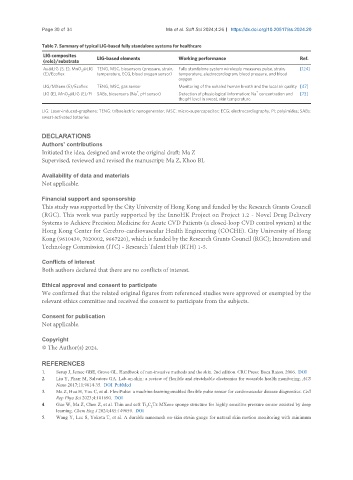
               Table 7. Summary of typical LIG-based fully standalone systems for healthcare
                LIG composites    LIG-based elements         Working performance                      Ref.
                (role)/substrate
                Au@LIG (S, E), MnO @LIG  TENG, MSC, biosensors (pressure, strain,  Fully standalone system wirelessly measures pulse, strain,   [124]
                            2
                (E)/Ecoflex       temperature, ECG, blood oxygen sensor)  temperature, electrocardiogram, blood pressure, and blood
                                                             oxygen
                LIG/MXene (E)/Ecoflex  TENG, MSC, gas sensor  Monitoring of the exhaled human breath and the local air quality [47]
                                               +                                       +
                LIG (E), MnO @LIG (E)/PI  SABs, biosensors (Na , pH sensor)  Detection of physiological information: Na  concentration and   [73]
                        2
                                                             the pH level in sweat, skin temperature
               LIG: Laser-induced-graphene; TENG: triboelectric nanogenerator; MSC: micro-supercapacitor; ECG: electrocardiography; PI: polyimides; SABs:
               sweat-activated batteries.


               DECLARATIONS
               Authors’ contributions
               Initiated the idea, designed and wrote the original draft: Ma Z
               Supervised, reviewed and revised the manuscript: Ma Z, Khoo BL

               Availability of data and materials
               Not applicable.

               Financial support and sponsorship
               This study was supported by the City University of Hong Kong and funded by the Research Grants Council
               (RGC). This work was partly supported by the InnoHK Project on Project 1.2 - Novel Drug Delivery
               Systems to Achieve Precision Medicine for Acute CVD Patients (a closed-loop CVD control system) at the
               Hong Kong Center for Cerebro-cardiovascular Health Engineering (COCHE). City University of Hong
               Kong (9610430, 7020002, 9667220), which is funded by the Research Grants Council (RGC); Innovation and
               Technology Commission (ITC) - Research Talent Hub (RTH) 1-5.


               Conflicts of interest
               Both authors declared that there are no conflicts of interest.


               Ethical approval and consent to participate
               We confirmed that the related original figures from referenced studies were approved or exempted by the
               relevant ethics committee and received the consent to participate from the subjects.


               Consent for publication
               Not applicable.


               Copyright
               © The Author(s) 2024.


               REFERENCES
               1.       Serup J, Jemec GBE, Grove GL. Handbook of non-invasive methods and the skin. 2nd edition. CRC Press: Boca Raton. 2006.  DOI
               2.       Liu Y, Pharr M, Salvatore GA. Lab-on-skin: a review of flexible and stretchable electronics for wearable health monitoring. ACS
                    Nano 2017;11:9614-35.  DOI  PubMed
               3.       Ma Z, Hua H, You C, et al. FlexiPulse: a machine-learning-enabled flexible pulse sensor for cardiovascular disease diagnostics. Cell
                    Rep Phys Sci 2023;4:101690.  DOI
               4.       Guo W, Ma Z, Chen Z, et al. Thin and soft Ti C Tx MXene sponge structure for highly sensitive pressure sensor assisted by deep
                                                  3  2
                    learning. Chem Eng J 2024;485:149659.  DOI
               5.       Wang Y, Lee S, Yokota T, et al. A durable nanomesh on-skin strain gauge for natural skin motion monitoring with minimum

