


Page 45 - Read Online
P. 45
Page 24 of 44                            Jung et al. Soft Sci 2024;4:15  https://dx.doi.org/10.20517/ss.2024.02


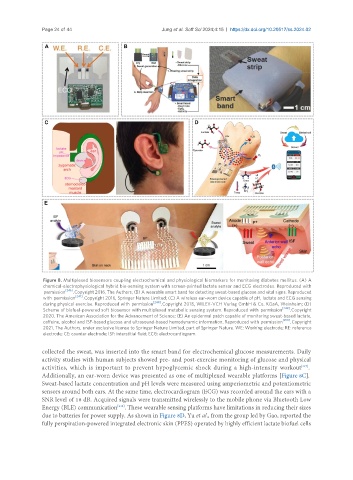
                Figure 8. Multiplexed biosensors coupling electrochemical and physiological biomarkers for monitoring diabetes mellitus. (A) A
                chemical-electrophysiological hybrid bio-sensing system with screen-printed lactate sensor and ECG electrodes. Reproduced with
                permission [246] . Copyright 2016, The Authors; (B) A wearable smart band for detecting sweat-based glucose and vital signs. Reproduced
                with permission [247] . Copyright 2016, Springer Nature Limited; (C) A wireless ear-worn device capable of pH, lactate and ECG sensing
                during physical exercise. Reproduced with  permission [248] . Copyright 2018, WILEY-VCH Verlag GmbH & Co. KGaA, Weinheim; (D)
                                                                                                [249]
                Scheme of biofuel-powered soft biosensor with multiplexed metabolic sensing system. Reproduced with  permission  . Copyright
                2020, The American Association for the Advancement of Science; (E) An epidermal patch capable of monitoring sweat-based lactate,
                                                                                                [250]
                caffeine, alcohol and ISF-based glucose and ultrasound-based hemodynamic information. Reproduced with  permission  . Copyright
                2021, The Authors, under exclusive license to Springer Nature Limited, part of Springer Nature. WE: Working electrode; RE: reference
                electrode; CE: counter electrode; ISF: interstitial fluid; ECG: electrocardiogram.
               collected the sweat, was inserted into the smart band for electrochemical glucose measurements. Daily
               activity studies with human subjects showed pre- and post-exercise monitoring of glucose and physical
               activities, which is important to prevent hypoglycemic shock during a high-intensity workout .
                                                                                                       [247]
               Additionally, an ear-worn device was presented as one of multiplexed wearable platforms [Figure 8C].
               Sweat-based lactate concentration and pH levels were measured using amperiometric and potentiometric
               sensors around both ears. At the same time, electrocardiogram (ECG) was recorded around the ears with a
               SNR level of 18 dB. Acquired signals were transmitted wirelessly to the mobile phone via Bluetooth Low
               Energy (BLE) communication . These wearable sensing platforms have limitations in reducing their sizes
                                         [248]
               due to batteries for power supply. As shown in Figure 8D, Yu et al., from the group led by Gao, reported the
               fully perspiration-powered integrated electronic skin (PPES) operated by highly efficient lactate biofuel cells

