


Page 50 - Read Online
P. 50
Jung et al. Soft Sci 2024;4:15  https://dx.doi.org/10.20517/ss.2024.02                                                     Page 29 of 44

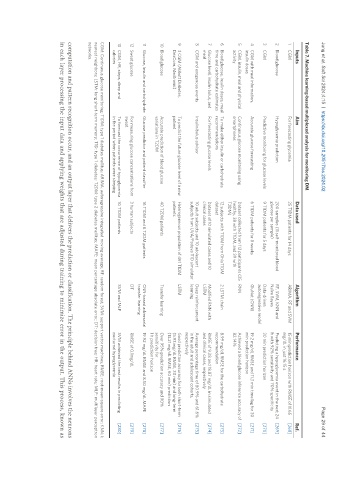
               Table 7. Machine learning-based multiplexed analysis for monitoring DM
                  Inputs                Aim                          Data used                   Algorithm       Performance                   Ref.
                1  CGM                  For forecasting glycemia     25 T1DM patients for 14 days  ARIMA, RF and SVM  15 min prediction horizon with RMSE of 11.65   [268]
                                                                                                                 mg/dL in just 16.15 s
                2 Blood glucose         Hypoglycemia prediction      200 samples (11 self-monitored blood   RF, SVM, KNN and   Predicting a hypoglycemia event in the next 24  [269]
                                                                     glucose per sample)         Naïve Bayes     h with 92% sensitivity and 70% specificity
                3 CGM                   Predictive monitoring for glucose levels  9 T1DM patients for 5 days  Data-driven   30 min prediction horizon  [270]
                                                                                                 autoregressive model
                4 CGM with meal information,   Accurate glucose forecasting  6 T1DM patients for 8 weeks  GluNet (CNN)  19.2 mg/dL RMSE and 11.3 min time lag for 30   [271]
                  insulin doses                                                                                  min prediction horizon
                5 CGM, insulin, meal and physical   Continuous glucose monitoring using   Dataset collected from 112 participants (35  RNN  Achieved a blood glucose inference accuracy of  [272]
                  activity              smartphones                  healthy, 38 with T1DM, and 39 with          82.14%
                                                                     T2DM)
                6 Blood glucose, insulin doses, meal  To make either insulin or carbohydrate   12 subjects with T1DM from OhioT1DM   2 LSTM chain  8.99 mg/dL RMSE for the carbohydrate   [273]
                  time and carbohydrate estimates  recommendations   dataset                                     recommendation
                7 Glucose level, insulin bolus, and   For forecasting glucose levels  Dataset of 10 simulated cases and 10   Modified RNN with   RMSE of 9.38 and 18.87 mg/dL in simulated   [274]
                  meal                                               clinical cases              LSTM            and clinical cases, respectively
                8 CGM and exogenous events  Insulin bolus advisor    10 adult subjects and 10 adolescent   Deep reinforcement   Average percentage time of 80.9% and 61.6%  [275]
                                                                     subjects from UVA/Padova T1D simulator  learning  in the adult and adolescent cohorts,
                                                                                                                 respectively
                9 3 CGM (Abbott Diabetes,   To predict the future glucose level of a new   Heterogeneous population of 451 T1DM   LSTM  Good prediction accuracy for both short-term   [276]
                  DexCom, Medtronic)    patient                      patients                                    (5.93 mg/dL RMSE, 30 min) and long-term
                                                                                                                 (13.21 mg/dL RMSE, 60 min) prediction
                10 Blood glucose        Accurate prediction of blood glucose   40 T2DM patients  Transfer learning  Over 95% prediction accuracy and 90%   [277]
                                        variations in T2DM                                                       sensitivity for
                                                                                                                 1 h prediction horizon
                11 Glucose, insulin and carbohydrate Glucose predictor and patient classifier  16 T1DM and 6 T2DM patients  CNN-based adversarial  19.92 mg/dL RMSE and 8.50 mg/dL MAPE  [278]
                                                                                                 transfer learning
                12 Sweat glucose        For measuring glucose concentrations from  3 human subjects  DT          RMSE of 0.1mg/dL              [279]
                                        sweat
                13 CGM, HR, steps, sleep and   To forecast the occurrence of hypoglycemia  10 T1DM patients  SVM and MLP  SVM achieved the best results in predicting   [280]
                  calories              in the period when patients were sleeping                                nocturnal hypoglycemia
               CGM: Continuous glucose monitoring; T1DM: type 1 diabetes mellitus; ARIMA: autoregressive integrated moving average; RF: random forest; SVM: support vector machines; RMSE: root-mean-square error; KNN: k
               nearest neighbors; LSTM: long short-term memory; T1D: type 1 diabetes; T2DM: type 2 diabetes mellitus; MAPE: mean percentage absolute error; DT: decision tree; HR: heart rate; MLP: multilayer perceptron
               networks.


               computation and pattern recognition occur, and an output layer that delivers the prediction or classification. The principle behind ANNs involves the neurons
               in each layer processing the input data and applying weights that are adjusted during training to minimize error in the output. This process, known as

