


Page 26 - Read Online
P. 26
Jung et al. Soft Sci 2024;4:15  https://dx.doi.org/10.20517/ss.2024.02           Page 5 of 44


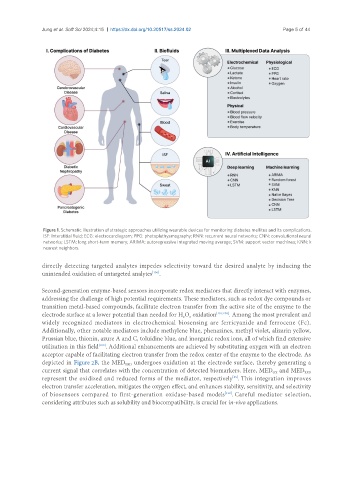
                Figure 1. Schematic illustration of strategic approaches utilizing wearable devices for monitoring diabetes mellitus and its complications.
                ISF: Interstitial fluid; ECG: electrocardiogram; PPG: photoplethysmography; RNN: recurrent neural networks; CNN: convolutional neural
                networks; LSTM: long short-term memory; ARIMA: autoregressive integrated moving average; SVM: support vector machines; KNN: k
                nearest neighbors.

               directly detecting targeted analytes impedes selectivity toward the desired analyte by inducing the
               unintended oxidation of untargeted analytes .
                                                    [106]
               Second-generation enzyme-based sensors incorporate redox mediators that directly interact with enzymes,
               addressing the challenge of high potential requirements. These mediators, such as redox dye compounds or
               transition metal-based compounds, facilitate electron transfer from the active site of the enzyme to the
               electrode surface at a lower potential than needed for H O  oxidation [107,108] . Among the most prevalent and
                                                                 2
                                                               2
               widely recognized mediators in electrochemical biosensing are ferricyanide and ferrocene (Fc).
               Additionally, other notable mediators include methylene blue, phenazines, methyl violet, alizarin yellow,
               Prussian blue, thionin, azure A and C, toluidine blue, and inorganic redox ions, all of which find extensive
                                  [109]
               utilization in this field . Additional enhancements are achieved by substituting oxygen with an electron
               acceptor capable of facilitating electron transfer from the redox center of the enzyme to the electrode. As
               depicted in Figure 2B, the MED  undergoes oxidation at the electrode surface, thereby generating a
                                           RED
               current signal that correlates with the concentration of detected biomarkers. Here, MED  and MED
                                                                                                        RED
                                                                                             OX
               represent the oxidized and reduced forms of the mediator, respectively . This integration improves
                                                                               [85]
               electron transfer acceleration, mitigates the oxygen effect, and enhances stability, sensitivity, and selectivity
               of biosensors compared to first-generation oxidase-based  models . Careful mediator selection,
                                                                             [110]
               considering attributes such as solubility and biocompatibility, is crucial for in-vivo applications.

