


Page 193 - Read Online
P. 193
Nam et al. Soft Sci 2023;3:28  https://dx.doi.org/10.20517/ss.2023.19                                                      Page 17 of 35

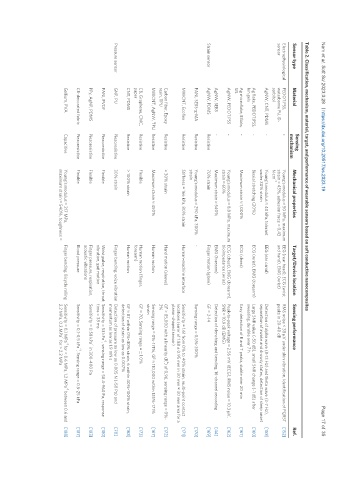
               Table 2. Classification, mechanism, material, target, and performance of wearable sensors based on soft conductive nanocomposites
                                              Sensing
                Sensor type    Material                   Mechanical properties    Target/Device location  Sensing performance                   Ref.
                                              mechanism
                Electrophysiological   PEDOT:PSS,   -     Young’s modulus ≈ 50 MPa, maximum  EEG (rear head), ECG (wrist   RMS noise < 38 μV under skin vibration, Identification of PQRST  [152]
                sensor         waterborne PU, D-          strain = 43%, adhesion force = 0.43   and hand), EMG (wrist)  peaks in 20-40 dB
                                                             -1
                               sorbitol                   N·cm
                               AgNW, CNT, PDMS  -         Young’s modulus ≈ 40 kPa, tolerant   EEG (ear canal)  Detection of alpha wave (8-13 Hz) and theta wave (3-7 Hz),  [158]
                                                          under 30% strain                             separation of awake and drowsy states, detection of sleep onset
                               Ag flake, PEDOT:PSS,   -   Biaxial stretching (20%)  ECG (wrist), EMG (forearm)  Large SNR value (~50 dB), small SNR change (~1 dB) after   [160]
                               Ion gels                                                                sweating, durable over 7 h
                               Ag microflake, EGaIn,   -  Maximum strain ≈ 1,000%  ECG (chest)         Easy detection of R and T peaks, stable over 20 min  [161]
                               SIS
                               AgNW, PEDOT:PSS  -         Young’s modulus ≈ 8.8 MPa, maximum  ECG (chest), EMG (forearm),  Peak-to-peak voltage ≈ 2.56 mV (ECG), RMS noise ≈ 10.3 μV,   [162]
                                                          strain ≈ 60%             bioimpedance (wrist)  SNR ≈ 10.9 dB (EMG)
                               AgNW, SEBS     -           Maximum strain ≈ 540%    EMG (forearm)       Detection of clenching and bending, 16-channel recording  [44]
                Strain sensor  AgNW, PDMS     Resistive   70% strain               Finger motion (glove)  GF = 2-14                               [169]

                               PANI, SEBS-g-MA  Resistive  Young’s modulus ≈ 290 kPa, 300%   -         Sensing range = 0.5%-300%                  [170]
                                                          strain
                               MWCNT, Ecoflex  Resistive  Stiffness = 166 kPa, 80% strain  Human-machine interface  Sensitivity = 1.61 from 0% to 40% strain, multi-point contact   [171]
                                                                                                       locations (error of 1.88 ± 0.95 mm in 30 mm × 30 mm area for a
                                                                                                       planar-shaped sensor)
                                                                                                                           2
                               Carbon fiber, Epoxy   Resistive  > 30% strain       Hand motion (sleeve)  GF > 85,000 with a linearity (R ) of 0.96, sensing range = 0%-  [172]
                               resin, TPU                                                              3%
                               MWCNT, AgNW, TPU Resistive  Maximum strain ≈ 450%   Human motion        Sensing range = 0%-171%, GF ≈ 110,000 within 135%-171%  [167]
                                                                                                       strain
                               CB, Graphene, CMC,   Resistive  Flexible            Human motion (finger,   GF ≈ 70, Sensing range = ± 1.0%       [173]
                               paper                                               forearm)
                               CNT, PDMS      Resistive   > 100% strain            Human motion        GF ≈ 87 within 0%-40% strain, 6 within 40%-100% strain,  [168]
                                                                                                       detection of strain as low as 0.007%
                Pressure sensor  GNP, PU      Piezoresistive  30% strain           Finger bending, voice vibration Detection of pressure as low as 0.005 N (~50 Pa) and   [70]
                                                                                                       momentum as low as 1.9 mN·s
                                                                                                                   -1
                               PANI, PVDF     Piezoresistive  Flexible             Wrist pulse, respiration, throat  Sensitivity = 53 kPa , sensing range = 58.4-960 Pa, response  [180]
                                                                                   vibration, gait motion  time = 38 ms
                                                                                                                     -1
                               PPy, AgNP, PDMS  Piezoresistive  Flexible           Finger pressure, respiration,  Sensitivity = 0.58 kPa  in 300-400 Pa    [183]
                                                                                   acoustic vibrations
                                                                                                                      -1
                               CB-decorated fabric  Piezoresistive  Flexible       Blood pressure      Sensitivity = 0.1-0.5 kPa , Sensing range = 0.5-25 kPa      [187]
                                                                                                                    -1              -1
                               Gallium, PVA   Capacitive  Young’s modulus = 217 MPa,   Finger bending, Bicycle rolling Sensitivity = 0.1 MPa  for < 0.6 MPa, 1.2 MPa  between 0.6 and  [188]
                                                                                                                  -1
                                                          maximum strain ≈ 540%, toughness =           2.2 MPa, 0.2 MPa  for > 2.2 MPa

