


Page 105 - Read Online
P. 105
Page 12 of 14    Bonapace-Potvin et al. Plast Aesthet Res. 2025;12:34  https://dx.doi.org/10.20517/2347-9264.2025.65


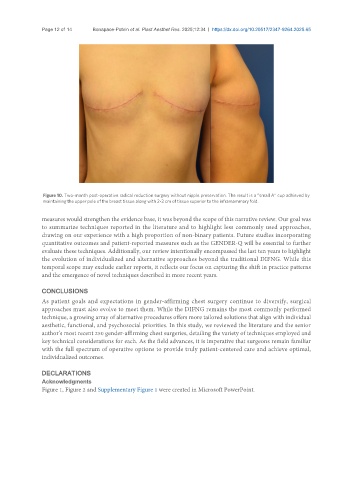
                Figure 10. Two-month post-operative radical reduction surgery without nipple preservation. The result is a “small A” cup achieved by
                maintaining the upper pole of the breast tissue along with 2-3 cm of tissue superior to the inframammary fold.

               measures would strengthen the evidence base, it was beyond the scope of this narrative review. Our goal was
               to summarize techniques reported in the literature and to highlight less commonly used approaches,
               drawing on our experience with a high proportion of non-binary patients. Future studies incorporating
               quantitative outcomes and patient-reported measures such as the GENDER-Q will be essential to further
               evaluate these techniques. Additionally, our review intentionally encompassed the last ten years to highlight
               the evolution of individualized and alternative approaches beyond the traditional DIFNG. While this
               temporal scope may exclude earlier reports, it reflects our focus on capturing the shift in practice patterns
               and the emergence of novel techniques described in more recent years.


               CONCLUSIONS
               As patient goals and expectations in gender-affirming chest surgery continue to diversify, surgical
               approaches must also evolve to meet them. While the DIFNG remains the most commonly performed
               technique, a growing array of alternative procedures offers more tailored solutions that align with individual
               aesthetic, functional, and psychosocial priorities. In this study, we reviewed the literature and the senior
               author’s most recent 250 gender-affirming chest surgeries, detailing the variety of techniques employed and
               key technical considerations for each. As the field advances, it is imperative that surgeons remain familiar
               with the full spectrum of operative options to provide truly patient-centered care and achieve optimal,
               individualized outcomes.


               DECLARATIONS
               Acknowledgments
               Figure 1, Figure 2 and Supplementary Figure 1 were created in Microsoft PowerPoint.

