


Page 102 - Read Online
P. 102
Bonapace-Potvin et al. Plast Aesthet Res. 2025;12:34  https://dx.doi.org/10.20517/2347-9264.2025.65  Page 9 of 14


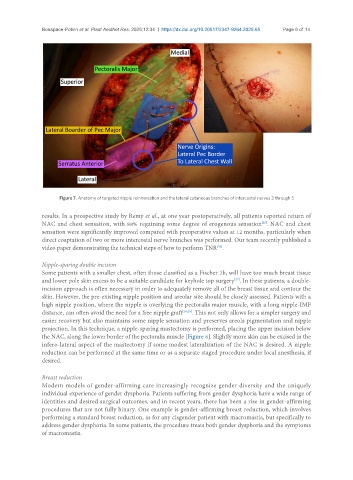
                     Figure 7. Anatomy of targeted nipple reinnervation and the lateral cutaneous branches of intercostal nerves 3 through 5.


               results. In a prospective study by Remy et al., at one year postoperatively, all patients reported return of
               NAC and chest sensation, with 88% regaining some degree of erogenous sensation . NAC and chest
                                                                                         [25]
               sensation were significantly improved compared with preoperative values at 12 months, particularly when
               direct coaptation of two or more intercostal nerve branches was performed. Our team recently published a
                                                                          [26]
               video paper demonstrating the technical steps of how to perform TNR .

               Nipple-sparing double incision
               Some patients with a smaller chest, often those classified as a Fischer 2b, will have too much breast tissue
               and lower pole skin excess to be a suitable candidate for keyhole top surgery . In these patients, a double-
                                                                                [27]
               incision approach is often necessary in order to adequately remove all of the breast tissue and contour the
               skin. However, the pre-existing nipple position and areolar size should be closely assessed. Patients with a
               high nipple position, where the nipple is overlying the pectoralis major muscle, with a long nipple-IMF
               distance, can often avoid the need for a free nipple graft [28,29] . This not only allows for a simpler surgery and
               easier recovery but also maintains some nipple sensation and preserves areola pigmentation and nipple
               projection. In this technique, a nipple-sparing mastectomy is performed, placing the upper incision below
               the NAC, along the lower border of the pectoralis muscle [Figure 8]. Slightly more skin can be excised in the
               infero-lateral aspect of the mastectomy if some modest lateralization of the NAC is desired. A nipple
               reduction can be performed at the same time or as a separate staged procedure under local anesthesia, if
               desired.


               Breast reduction
               Modern models of gender-affirming care increasingly recognize gender diversity and the uniquely
               individual experience of gender dysphoria. Patients suffering from gender dysphoria have a wide range of
               identities and desired surgical outcomes, and in recent years, there has been a rise in gender-affirming
               procedures that are not fully binary. One example is gender-affirming breast reduction, which involves
               performing a standard breast reduction, as for any cisgender patient with macromastia, but specifically to
               address gender dysphoria. In some patients, the procedure treats both gender dysphoria and the symptoms
               of macromastia.

