


Page 51 - Read Online
P. 51
Aydin et al. J Transl Genet Genom. 2025;9:406-26  https://dx.doi.org/10.20517/jtgg.2025.108                                     Page 418


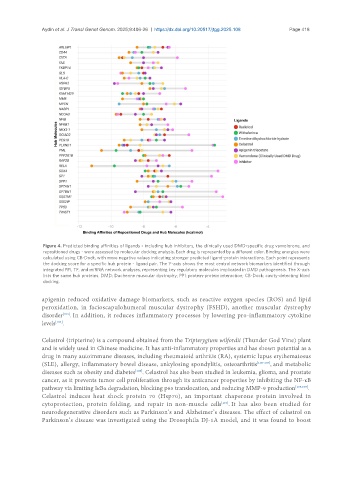
                Figure 4. Predicted binding affinities of ligands - including hub inhibitors, the clinically used DMD-specific drug vamolorone, and
                repositioned drugs - were assessed by molecular docking analysis. Each drug is represented by a different color. Binding energies were
                calculated using CB-Dock, with more negative values indicating stronger predicted ligand-protein interactions. Each point represents
                the docking score for a specific hub protein - ligand pair. The Y-axis shows the most central network biomarkers identified through
                integrated PPI, TF, and miRNA network analyses, representing key regulatory molecules implicated in DMD pathogenesis. The X-axis
                lists the same hub proteins. DMD: Duchenne muscular dystrophy; PPI: protein-protein interaction; CB-Dock: cavity-detecting blind
                docking.

               apigenin reduced oxidative damage biomarkers, such as reactive oxygen species (ROS) and lipid
               peroxidation, in facioscapulohumeral muscular dystrophy (FSHD), another muscular dystrophy
               disorder . In addition, it reduces inflammatory processes by lowering pro-inflammatory cytokine
                      [103]
               levels .
                    [104]
               Celastrol (tripterine) is a compound obtained from the Tripterygium wilfordii (Thunder God Vine) plant
               and is widely used in Chinese medicine. It has anti-inflammatory properties and has shown potential as a
               drug in many autoimmune diseases, including rheumatoid arthritis (RA), systemic lupus erythematosus
               (SLE), allergy, inflammatory bowel disease, ankylosing spondylitis, osteoarthritis [105-107] , and metabolic
               diseases such as obesity and diabetes . Celastrol has also been studied in leukemia, glioma, and prostate
                                               [108]
               cancer, as it prevents tumor cell proliferation through its anticancer properties by inhibiting the NF-κB
               pathway via limiting IκBα degradation, blocking p65 translocation, and reducing MMP-9 production [105,109] .
               Celastrol  induces  heat  shock  protein  70  (Hsp70),  an  important  chaperone  protein  involved  in
                                                                            [110]
               cytoprotection,  protein  folding,  and  repair  in  non-muscle  cells . It  has  also  been  studied  for
               neurodegenerative disorders such as Parkinson’s and Alzheimer’s diseases. The effect of celastrol on
               Parkinson’s disease was investigated using the Drosophila DJ-1A model, and it was found to boost

