


Page 53 - Read Online
P. 53
Page 177                Kamal et al. J Transl Genet Genom 2024;8:162-85  https://dx.doi.org/10.20517/jtgg.2023.55


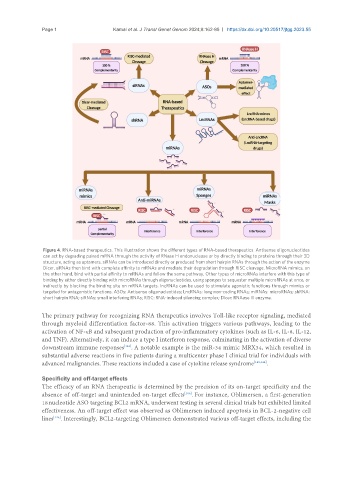
                Figure 4. RNA-based therapeutics. This illustration shows the different types of RNA-based therapeutics. Antisense oligonucleotides
                can act by degrading paired mRNA through the activity of RNase H endonuclease or by directly binding to proteins through their 3D
                structure, acting as aptamers. siRNAs can be introduced directly or produced from short hairpin RNAs through the action of the enzyme
                Dicer. siRNAs then bind with complete affinity to mRNAs and mediate their degradation through RISC cleavage. MicroRNA mimics, on
                the other hand, bind with partial affinity to mRNAs and follow the same pathway. Other types of microRNAs interfere with this type of
                binding by either directly binding with microRNAs through oligonucleotides, using sponges to sequester multiple microRNAs at once, or
                indirectly by blocking the binding site on mRNA targets. lncRNAs can be used to stimulate agonistic functions through mimics or
                targeted for antagonistic functions. ASOs: Antisense oligonucleotides; LncRNAs: long non-coding RNAs; miRNAs: microRNAs; shRNA:
                short hairpin RNA; siRNAs: small interfering RNAs; RISC: RNA-induced silencing complex; Dicer: RNAase III enzyme.


               The primary pathway for recognizing RNA therapeutics involves Toll-like receptor signaling, mediated
               through myeloid differentiation factor-88. This activation triggers various pathways, leading to the
               activation of NF-κB and subsequent production of pro-inflammatory cytokines (such as IL-6, IL-8, IL-12,
               and TNF). Alternatively, it can induce a type I interferon response, culminating in the activation of diverse
               downstream immune responses . A notable example is the miR-34 mimic MRX34, which resulted in
                                           [142]
               substantial adverse reactions in five patients during a multicenter phase I clinical trial for individuals with
               advanced malignancies. These reactions included a case of cytokine release syndrome [143,144] .

               Specificity and off-target effects
               The efficacy of an RNA therapeutic is determined by the precision of its on-target specificity and the
               absence of off-target and unintended on-target effects . For instance, Oblimersen, a first-generation
                                                               [106]
               18 nucleotide ASO targeting BCL2 mRNA, underwent testing in several clinical trials but exhibited limited
               effectiveness. An off-target effect was observed as Oblimersen induced apoptosis in BCL-2-negative cell
               lines . Interestingly, BCL2-targeting Oblimersen demonstrated various off-target effects, including the
                   [145]

