


Page 38 - Read Online
P. 38
Li et al. J. Mater. Inf. 2025, 5, 21  https://dx.doi.org/10.20517/jmi.2024.87    Page 3 of 15


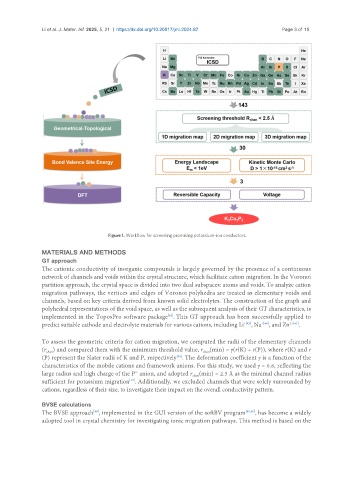
                                     Figure 1. Workflow for screening promising potassium-ion conductors.


               MATERIALS AND METHODS
               GT approach
               The cationic conductivity of inorganic compounds is largely governed by the presence of a continuous
               network of channels and voids within the crystal structure, which facilitate cation migration. In the Voronoi
               partition approach, the crystal space is divided into two dual subspaces: atoms and voids. To analyze cation
               migration pathways, the vertices and edges of Voronoi polyhedra are treated as elementary voids and
               channels, based on key criteria derived from known solid electrolytes. The construction of the graph and
               polyhedral representations of the void space, as well as the subsequent analysis of their GT characteristics, is
                                                          [42]
               implemented in the ToposPro software package . This GT approach has been successfully applied to
                                                                                         +[44]
                                                                                   +[43]
               predict suitable cathode and electrolyte materials for various cations, including Li , Na , and Zn 2+[45] .
               To assess the geometric criteria for cation migration, we computed the radii of the elementary channels
               (r ) and compared them with the minimum threshold value, r (min) = γ(r(K) + r(P)), where r(K) and r
                 chan
                                                                     chan
               (P) represent the Slater radii of K and P, respectively . The deformation coefficient γ is a function of the
                                                             [46]
               characteristics of the mobile cations and framework anions. For this study, we used γ = 0.8, reflecting the
               large radius and high charge of the P  anion, and adopted r (min) = 2.5 Å as the minimal channel radius
                                               3-
                                                                  chan
               sufficient for potassium migration . Additionally, we excluded channels that were solely surrounded by
                                             [47]
               cations, regardless of their size, to investigate their impact on the overall conductivity pattern.
               BVSE calculations
                                 [48]
               The BVSE approach , implemented in the GUI version of the softBV program [49,50] , has become a widely
               adopted tool in crystal chemistry for investigating ionic migration pathways. This method is based on the

