


Page 72 - Read Online
P. 72
Wu et al. J. Mater. Inf. 2025, 5, 14  https://dx.doi.org/10.20517/jmi.2024.77    Page 9 of 15


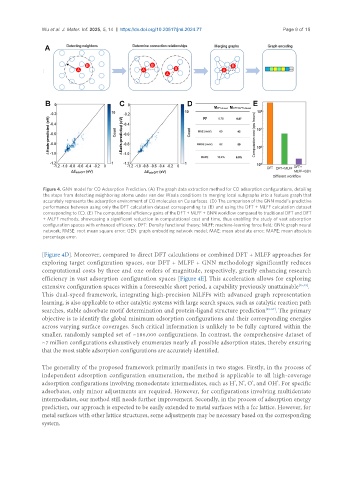
                Figure 4. GNN model for CO Adsorption Prediction. (A) The graph data extraction method for CO adsorption configurations, detailing
                the steps from detecting neighboring atoms under van der Waals conditions to merging local subgraphs into a feature graph that
                accurately represents the adsorption environment of CO molecules on Cu surfaces. (D) The comparison of the GNN model’s predictive
                performance between using only the DFT calculation dataset corresponding to (B) and using the DFT + MLFF calculation dataset
                corresponding to (C). (E) The computational efficiency gains of the DFT + MLFF + GNN workflow compared to traditional DFT and DFT
                + MLFF methods, showcasing a significant reduction in computational cost and time, thus enabling the study of vast adsorption
                configuration spaces with enhanced efficiency. DFT: Density functional theory; MLFF: machine-learning force field; GNN: graph neural
                network; RMSE: root mean square error; GEN: graph embedding network model; MAE: mean absolute error; MAPE: mean absolute
                percentage error.


               [Figure 4D]. Moreover, compared to direct DFT calculations or combined DFT + MLFF approaches for
               exploring target configuration spaces, our DFT + MLFF + GNN methodology significantly reduces
               computational costs by three and one orders of magnitude, respectively, greatly enhancing research
               efficiency in vast adsorption configuration spaces [Figure 4E]. This acceleration allows for exploring
               extensive configuration spaces within a foreseeable short period, a capability previously unattainable [25,29] .
               This dual-speed framework, integrating high-precision MLFFs with advanced graph representation
               learning, is also applicable to other catalytic systems with large search spaces, such as catalytic reaction path
               searches, stable adsorbate motif determination and protein-ligand structure prediction [55-57] . The primary
               objective is to identify the global minimum adsorption configurations and their corresponding energies
               across varying surface coverages. Such critical information is unlikely to be fully captured within the
               smaller, randomly sampled set of ~186,000 configurations. In contrast, the comprehensive dataset of
               ~7 million configurations exhaustively enumerates nearly all possible adsorption states, thereby ensuring
               that the most stable adsorption configurations are accurately identified.

               The generality of the proposed framework primarily manifests in two stages. Firstly, in the process of
               independent adsorption configuration enumeration, the method is applicable to all high-coverage
               adsorption configurations involving monodentate intermediates, such as H , N , O , and OH . For specific
                                                                                              *
                                                                                *
                                                                                   *
                                                                                      *
               adsorbates, only minor adjustments are required. However, for configurations involving multidentate
               intermediates, our method still needs further improvement. Secondly, in the process of adsorption energy
               prediction, our approach is expected to be easily extended to metal surfaces with a fcc lattice. However, for
               metal surfaces with other lattice structures, some adjustments may be necessary based on the corresponding
               system.

