


Page 13 - Read Online
P. 13
Page 6 of 33                           Liu et al. J Mater Inf 2024;4:33  https://dx.doi.org/10.20517/jmi.2024.48


                                                                     [37]
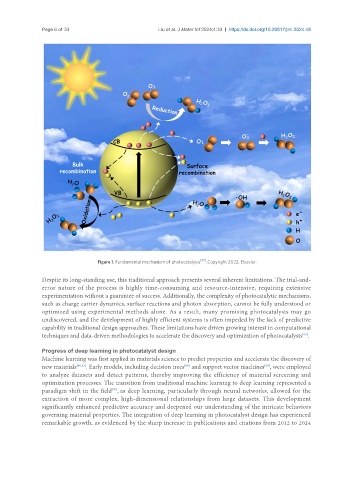
                                  Figure 1. Fundamental mechanism of photocatalysis  . Copyright 2022, Elsevier.

               Despite its long-standing use, this traditional approach presents several inherent limitations. The trial-and-
               error nature of the process is highly time-consuming and resource-intensive, requiring extensive
               experimentation without a guarantee of success. Additionally, the complexity of photocatalytic mechanisms,
               such as charge carrier dynamics, surface reactions and photon absorption, cannot be fully understood or
               optimized using experimental methods alone. As a result, many promising photocatalysts may go
               undiscovered, and the development of highly efficient systems is often impeded by the lack of predictive
               capability in traditional design approaches. These limitations have driven growing interest in computational
               techniques and data-driven methodologies to accelerate the discovery and optimization of photocatalysts .
                                                                                                       [65]
               Progress of deep learning in photocatalyst design
               Machine learning was first applied in materials science to predict properties and accelerate the discovery of
                                                               [68]
               new materials [66,67] . Early models, including decision trees  and support vector machines , were employed
                                                                                          [69]
               to analyze datasets and detect patterns, thereby improving the efficiency of material screening and
               optimization processes. The transition from traditional machine learning to deep learning represented a
               paradigm shift in the field , as deep learning, particularly through neural networks, allowed for the
                                       [70]
               extraction of more complex, high-dimensional relationships from large datasets. This development
               significantly enhanced predictive accuracy and deepened our understanding of the intricate behaviors
               governing material properties. The integration of deep learning in photocatalyst design has experienced
               remarkable growth, as evidenced by the sharp increase in publications and citations from 2012 to 2024

