


Page 75 - Read Online
P. 75
Page 16 of 25                       Meng et al. J. Mater. Inf. 2025, 5, 3  https://dx.doi.org/10.20517/jmi.2024.74


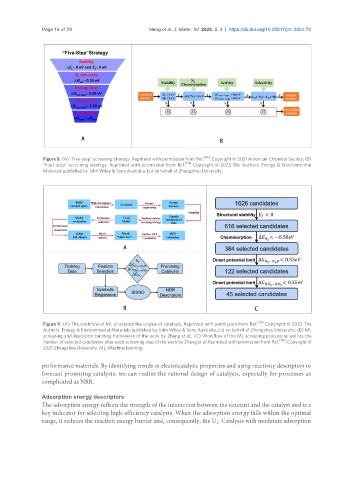
                Figure 8. (A) “Five-step” screening strategy. Reprinted with permission from Ref. [116] . Copyright © 2021 American Chemical Society; (B)
                “Four-step” screening strategy. Reprinted with permission from  Ref. [118] . Copyright © 2023 The Authors. Energy & Environmental
                Materials published by John Wiley & Sons Australia, Ltd on behalf of Zhengzhou University.


                Figure 9. (A) The workflow of ML to explore the origins of catalysis. Reprinted with permission from  Ref. [118] . Copyright © 2023 The
                Authors. Energy & Environmental Materials published by John Wiley & Sons Australia, Ltd on behalf of Zhengzhou University; (B) ML
                screening and descriptor building framework of the work by Zhang et al.; (C) Workflow of the ML screening process as well as the
                number of selected candidates after each screening step of the work by Zhang et al. Reprinted with permission from Ref. [119] . Copyright ©
                2021 Zhengzhou University. ML: Machine learning.

               performance materials. By identifying trends in electrocatalytic properties and using reactivity descriptors to
               forecast promising catalysts, we can realize the rational design of catalysts, especially for processes as
               complicated as NRR.

               Adsorption energy descriptors
               The adsorption energy reflects the strength of the interaction between the reactant and the catalyst and is a
               key indicator for selecting high-efficiency catalysts. When the adsorption energy falls within the optimal
               range, it reduces the reaction energy barrier and, consequently, the U . Catalysts with moderate adsorption
                                                                          L

