


Page 107 - Read Online
P. 107
Wu et al. J. Mater. Inf. 2025, 5, 15  https://dx.doi.org/10.20517/jmi.2024.67   Page 11 of 15


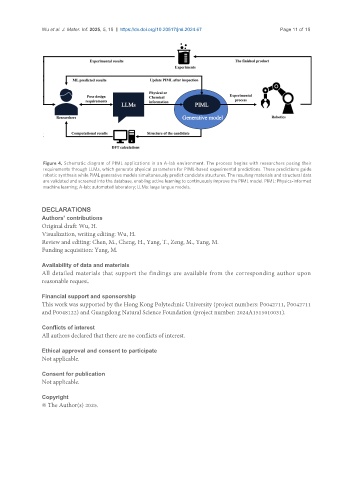
                Figure 4. Schematic diagram of PIML applications in an A-lab environment. The process begins with researchers posing their
                requirements through LLMs, which generate physical parameters for PIML-based experimental predictions. These predictions guide
                robotic synthesis while PIML generative models simultaneously predict candidate structures. The resulting materials and structural data
                are validated and screened into the database, enabling active learning to continuously improve the PIML model. PIML: Physics-informed
                machine learning; A-lab: automated laboratory; LLMs: large langue models.


               DECLARATIONS
               Authors’ contributions
               Original draft: Wu, H.
               Visualization, writing editing: Wu, H.
               Review and editing: Chen, M., Cheng, H., Yang, T., Zeng, M., Yang, M.
               Funding acquisition: Yang, M.

               Availability of data and materials
               All detailed materials that support the findings are available from the corresponding author upon
               reasonable request.


               Financial support and sponsorship
               This work was supported by the Hong Kong Polytechnic University (project numbers: P0042711, P0042711
               and P0048122) and Guangdong Natural Science Foundation (project number: 2024A1515010031).

               Conflicts of interest
               All authors declared that there are no conflicts of interest.

               Ethical approval and consent to participate
               Not applicable.

               Consent for publication
               Not applicable.

               Copyright
               © The Author(s) 2025.

