


Page 91 - Read Online
P. 91
Andjelkovic et al. J Environ Expo Assess 2024;3:23  https://dx.doi.org/10.20517/jeea.2024.22  Page 5 of 20


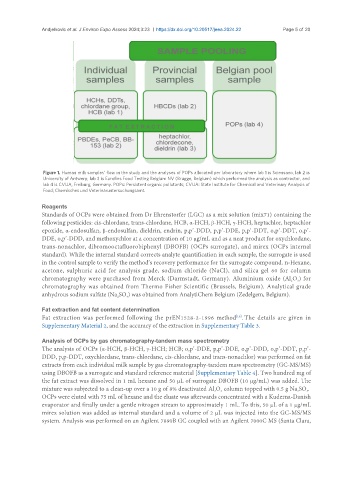
                Figure 1. Human milk samples’ flow in the study and the analyses of POPs allocated per laboratory where lab 1 is Sciensano, lab 2 is
                University of Antwerp, lab 3 is Eurofins Food Testing Belgium NV (Brugge, Belgium) which performed the analysis as contractor, and
                lab 4 is CVUA, Freiburg, Germany. POPs: Persistent organic pollutants; CVUA: State Institute for Chemical and Veterinary Analysis of
                Food; Chemisches und Veterinäruntersuchungsamt.

               Reagents
               Standards of OCPs were obtained from Dr Ehrenstorfer (LGC) as a mix solution (mix71) containing the
               following pesticides: cis-chlordane, trans-chlordane, HCB, α-HCH, β-HCH, γ-HCH, heptachlor, heptachlor
               epoxide, α-endosulfan, β-endosulfan, dieldrin, endrin, p,p’-DDD, p,p’-DDE, p,p’-DDT, o,p’-DDT, o,p’-
               DDE, o,p’-DDD, and methoxychlor at a concentration of 10 µg/mL and as a neat product for oxychlordane,
               trans-nonachlor, dibromooctafluorobiphenyl (DBOFB) (OCPs surrogate), and mirex (OCPs internal
               standard). While the internal standard corrects analyte quantification in each sample, the surrogate is used
               in the control sample to verify the method’s recovery performance for the surrogate compound. n-Hexane,
               acetone, sulphuric acid for analysis grade, sodium chloride (NaCl), and silica gel 60 for column
               chromatography were purchased from Merck (Darmstadt, Germany). Aluminium oxide (Al O ) for
                                                                                                   2
                                                                                                     3
               chromatography was obtained from Thermo Fisher Scientific (Brussels, Belgium). Analytical grade
               anhydrous sodium sulfate (Na SO ) was obtained from AnalytiChem Belgium (Zedelgem, Belgium).
                                         2
                                            4
               Fat extraction and fat content determination
               Fat extraction was performed following the prEN1528-2-1996 method . The details are given in
                                                                                 [19]
               Supplementary Material 2, and the accuracy of the extraction in Supplementary Table 3.

               Analysis of OCPs by gas chromatography-tandem mass spectrometry
               The analysis of OCPs (α-HCH, β-HCH, γ-HCH; HCB; o,p’-DDE, p,p’-DDE, o,p’-DDD, o,p’-DDT, p,p’-
               DDD, p,p-DDT, oxychlordane, trans-chlordane, cis-chlordane, and trans-nonachlor) was performed on fat
               extracts from each individual milk sample by gas chromatography-tandem mass spectrometry (GC-MS/MS)
               using DBOFB as a surrogate and standard reference material [Supplementary Table 4]. Two hundred mg of
               the fat extract was dissolved in 1 mL hexane and 50 µL of surrogate DBOFB (10 µg/mL) was added. The
               mixture was subjected to a clean-up over a 10 g of 8% deactivated Al O  column topped with 0.5 g Na SO .
                                                                                                        4
                                                                                                     2
                                                                           3
                                                                         2
               OCPs were eluted with 75 mL of hexane and the eluate was afterwards concentrated with a Kuderna-Danish
               evaporator and finally under a gentle nitrogen stream to approximately 1 mL. To this, 50 µL of a 1 µg/mL
               mirex solution was added as internal standard and a volume of 2 µL was injected into the GC-MS/MS
               system. Analysis was performed on an Agilent 7890B GC coupled with an Agilent 7000C MS (Santa Clara,

