


Page 74 - Read Online
P. 74
Ma et al. Hepatoma Res. 2026;12:43                                                Page 5 of 22


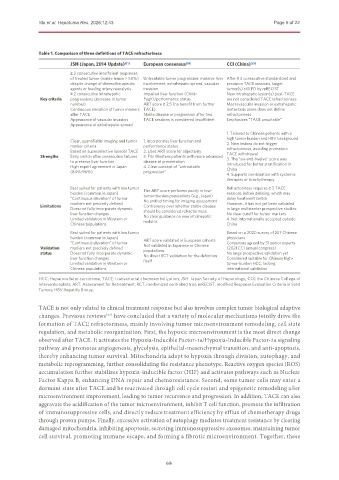
               Table 1. Comparison of three definitions of TACE refractoriness
                          JSH (Japan, 2014 Update) [21]  European consensus [20]  CCI (China) [23]

                          ≥ 2 consecutive insufficient responses
                          of treated tumor (viable lesion > 50%)  Untreatable tumor progression: massive liver After ≥ 3 consecutive standardized and
                          despite change of chemotherapeutic  involvement, extrahepatic spread, vascular  precision TACE sessions, target
                          agents or feeding artery reanalysis  invasion          tumor(s) still PD by mRECIST
                          ≥ 2 consecutive intrahepatic  Impaired liver function (Child-  New intrahepatic lesion(s) post-TACE
               Key criteria  progressions (increase in tumor  Pugh)/performance status  are not considered TACE refractoriness
                          number)                  ART score ≥ 2.5 (no benefit from further  Macrovascular invasion or extrahepatic
                          Continuous elevation of tumor markers TACE)            metastasis alone does not define
                          after TACE               Stable disease or progression after two  refractoriness
                          Appearance of vascular invasion  TACE sessions is considered insufficient  Emphasizes “TACE unsuitable”
                          Appearance of extrahepatic spread
                                                                                 1. Tailored to Chinese patients with a
                                                                                 high tumor burden and HBV background
                          Clear, quantifiable imaging and tumor  1. Incorporates liver function and  2. New lesions do not trigger
                          marker criteria          performance status            refractoriness, avoiding premature
                          Based on superselective lipiodol TACE  2. Uses ART score for objectivity  TACE withdrawal
               Strengths  Early switch after consecutive failures  3. Fits Western patients with more advanced  3. The “six-and-twelve” score was
                          to preserve liver function  disease at presentation    introduced for better stratification in
                          High expert agreement in Japan  4. Clear concept of “untreatable  China
                          (84%-96%)                progression”
                                                                                 4. Supports combination with systemic
                                                                                 therapies or brachytherapy
                          Best suited for patients with low tumor                Refractoriness requires ≥ 3 TACE
                          burden (common in Japan)  The ART score performs poorly in low-  sessions before defining, which may
                          “Continuous elevation” of tumor  tumor-burden populations (e.g., Japan)  delay treatment switch
                          markers not precisely defined  No unified timing for imaging assessment  However, it has not yet been validated
               Limitations                         Controversy over whether stable disease
                          Does not fully incorporate dynamic                     in large multicenter prospective studies
                          liver function changes   should be considered refractoriness  No clear cutoff for tumor markers
                          Limited validation in Western or  No clear guidance on new intrahepatic  4. Not internationally accepted outside
                          Chinese populations      nodules                       China
                          Best suited for patients with low tumor                Based on a 2020 survey of 257 Chinese
                          burden (common in Japan)                               physicians
                          “Continuous elevation” of tumor  ART score validated in European cohorts  Consensus agreed by 31 senior experts
               Validation  markers not precisely defined  Not validated in Japanese or Chinese  (2021 CCI annual congress)
               status     Does not fully incorporate dynamic  populations        No large prospective validation yet
                          liver function changes   No direct RCT validation for the definition  Considered suitable for Chinese high-
                          Limited validation in Western or  itself               tumor-burden HCC, lacking
                          Chinese populations                                    international validation
               HCC: Hepatocellular carcinoma; TACE: transarterial chemoembolization; JSH: Japan Society of Hepatology; CCI: the Chinese College of
               Interventionalists; ART: Assessment for Retreatment; RCT: randomized controlled trial; mRECIST: modified Response Evaluation Criteria in Solid
               Tumors; HBV: hepatitis B virus.

               TACE is not only related to clinical treatment response but also involves complex tumor biological adaptive
               changes. Previous reviews  have concluded that a variety of molecular mechanisms jointly drive the
                                      [25]
               formation of TACE refractoriness, mainly involving tumor microenvironment remodeling, cell state
               regulation, and metabolic reorganization. First, the hypoxic microenvironment is the most direct change
               observed after TACE. It activates the Hypoxia-Inducible Factor-1α/Hypoxia-Inducible Factor-2α signaling
               pathway and promotes angiogenesis, glycolysis, epithelial-mesenchymal transition, and anti-apoptosis,
               thereby enhancing tumor survival. Mitochondria adapt to hypoxia through division, autophagy, and
               metabolic reprogramming, further consolidating the resistance phenotype. Reactive oxygen species (ROS)
               accumulation further stabilizes hypoxia-inducible factor (HIF) and activates pathways such as Nuclear
               Factor Kappa B, enhancing DNA repair and chemoresistance. Second, some tumor cells may enter a
               dormant state after TACE and be reactivated through cell cycle restart and epigenetic remodeling after
               microenvironment improvement, leading to tumor recurrence and progression. In addition, TACE can also
               aggravate the acidification of the tumor microenvironment, inhibit T cell function, promote the infiltration
               of immunosuppressive cells, and directly reduce treatment efficiency by efflux of chemotherapy drugs
               through proton pumps. Finally, excessive activation of autophagy mediates treatment resistance by clearing
               damaged mitochondria, inhibiting apoptosis, secreting immunosuppressive exosomes, maintaining tumor
               cell survival, promoting immune escape, and forming a fibrotic microenvironment. Together, these

