


Page 73 - Read Online
P. 73
Page 4 of 22                                                     Ma et al. Hepatoma Res. 2026;12:43


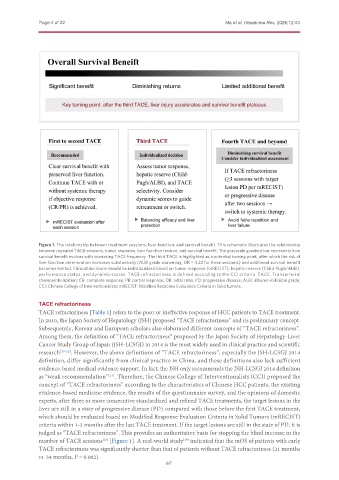
               Figure 1. The relationship between treatment sessions, liver function, and survival benefit. This schematic illustrates the relationship
               between repeated TACE sessions, tumor response, liver function reserve, and survival benefit. The grayscale gradient bar represents how
               survival benefit evolves with increasing TACE frequency. The third TACE is highlighted as a potential turning point, after which the risk of
               liver function deterioration increases substantially (ALBI grade worsening, OR = 3.22 for three sessions) and additional survival benefit
               becomes limited. Clinical decisions should be individualized based on tumor response (mRECIST), hepatic reserve (Child-Pugh/ALBI),
               performance status, and dynamic scores. TACE refractoriness is defined according to the CCI criteria. TACE: Transarterial
               chemoembolization; CR: complete response; PR: partial response; OR: odds ratio; PD: progressive disease; ALBI: albumin-bilirubin grade;
               CCI: Chinese College of Interventionalists; mRECIST: Modified Response Evaluation Criteria in Solid tumors.


               TACE refractoriness
               TACE refractoriness [Table 1] refers to the poor or ineffective response of HCC patients to TACE treatment.
               In 2010, the Japan Society of Hepatology (JSH) proposed “TACE refractoriness” and its preliminary concept.
               Subsequently, Korean and European scholars also elaborated different concepts of “TACE refractoriness”.
               Among them, the definition of “TACE refractoriness” proposed by the Japan Society of Hepatology-Liver
               Cancer Study Group of Japan (JSH-LCSGJ) in 2014 is the most widely used in clinical practice and scientific
               research [20-22] . However, the above definitions of “TACE refractoriness”, especially the JSH-LCSGJ 2014
               definition, differ significantly from clinical practice in China, and these definitions also lack sufficient
               evidence-based medical evidence support. In fact, the JSH only recommends the JSH-LCSGJ 2014 definition
               as “weak recommendation” . Therefore, the Chinese College of Interventionalists (CCI) proposed the
                                       [21]
               concept of “TACE refractoriness” according to the characteristics of Chinese HCC patients, the existing
               evidence-based medicine evidence, the results of the questionnaire survey, and the opinions of domestic
               experts, after three or more consecutive standardized and refined TACE treatments, the target lesions in the
               liver are still in a state of progressive disease (PD) compared with those before the first TACE treatment,
               which should be evaluated based on Modified Response Evaluation Criteria in Solid Tumors (mRECIST)
               criteria within 1-3 months after the last TACE treatment. If the target lesions are still in the state of PD, it is
               judged as “TACE refractoriness”. This provides an authoritative basis for stopping the blind increase in the
               number of TACE sessions  [Figure 1]. A real-world study  indicated that the mOS of patients with early
                                                                 [24]
                                     [23]
               TACE refractoriness was significantly shorter than that of patients without TACE refractoriness (21 months
               vs. 34 months, P = 0.002).

