


Page 44 - Read Online
P. 44
Hall et al. Hepatoma Res. 2026;12:20 Page 5 of 15
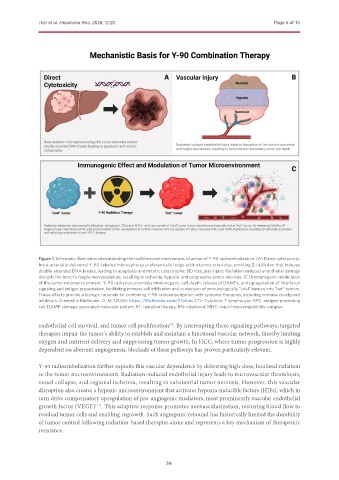
Figure 1. Schematic illustration demonstrating the multifactorial mechanisms of action of Y-90 radioembolization. (A) Direct cytotoxicity:
Intra-arterially delivered Y-90-labeled microspheres preferentially lodge within tumor arterioles, emitting β-radiation that induces
double-stranded DNA breaks, leading to apoptosis and mitotic catastrophe; (B) Vascular injury: Radiation-induced endothelial damage
disrupts the tumor’s fragile neovasculature, resulting in ischemia, hypoxia, and progressive tumor necrosis; (C) Immunogenic modulation
of the tumor microenvironment: Y-90 radiation promotes immunogenic cell death, release of DAMPs, and upregulation of interferon
signaling and antigen presentation, facilitating immune cell infiltration and conversion of immunologically “cold” tumors into “hot” tumors.
These effects provide a biologic rationale for combining Y-90 radioembolization with systemic therapies, including immune checkpoint
inhibitors. Created in BioRender. D, M. (2026) https://BioRender.com/37vhiax CTL: Cytotoxic T lymphocyte; APC: antigen-presenting
cell; DAMP: damage-associated molecular pattern; RT: radiation therapy; IFN: interferon; MHC: major histocompatibility complex.
endothelial cell survival, and tumor cell proliferation . By interrupting these signaling pathways, targeted
[9]
therapies impair the tumor’s ability to establish and maintain a functional vascular network, thereby limiting
oxygen and nutrient delivery and suppressing tumor growth. In HCC, where tumor progression is highly
dependent on aberrant angiogenesis, blockade of these pathways has proven particularly relevant.
Y-90 radioembolization further exploits this vascular dependence by delivering high-dose, localized radiation
to the tumor microenvironment. Radiation-induced endothelial injury leads to microvascular thrombosis,
vessel collapse, and regional ischemia, resulting in substantial tumor necrosis. However, this vascular
disruption also creates a hypoxic microenvironment that activates hypoxia-inducible factors (HIFs), which in
turn drive compensatory upregulation of pro-angiogenic mediators, most prominently vascular endothelial
growth factor (VEGF) . This adaptive response promotes neovascularization, restoring blood flow to
[11]
residual tumor cells and enabling regrowth. Such angiogenic rebound has historically limited the durability
of tumor control following radiation-based therapies alone and represents a key mechanism of therapeutic
resistance.

