


Page 48 - Read Online
P. 48
Hall et al. Hepatoma Res. 2026;12:20                                              Page 9 of 15


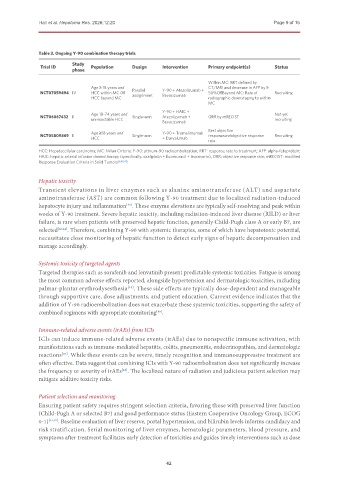
               Table 3. Ongoing Y-90 combination therapy trials
                          Study
               Trial ID          Population    Design     Intervention    Primary endpoint(s)    Status
                          phase

                                                                          Within MC: RRT defined by
                                 Age ≥ 18 years and                       CT/MRI and decrease in AFP by ≥
               NCT07059494 IV    HCC within MC OR  Parallel  Y-90 + Atezolizumab +  50%ORBeyond MC: Rate of  Recruiting
                                 HCC beyond MC  assignment  Bevacizumab   radiographic downstaging to within
                                                                          MC
                                                          Y-90 + HAIC +
                                 Age 18-74 years and                                             Not yet
               NCT06867432 II                  Single-arm  Atezolizumab +  ORR by mRECIST
                                 unresectable HCC                                                recruiting
                                                          Bevacizumab
                                                                          Best objective
                                 Age ≥18 years and        Y-90 + Tremelimumab
               NCT05809869 II                  Single-arm                 responseandobjective response  Recruiting
                                 HCC                      + Durvalumab
                                                                          rate
               HCC: Hepatocellular carcinoma; MC: Milan Criteria; Y-90: yttrium-90 radioembolization; RRT: response rate to treatment; AFP: alpha-fetoprotein;
               HAIC: hepatic arterial infusion chemotherapy (specifically: oxaliplatin + fluorouracil + leucovorin); ORR: objective response rate; mRECIST: modified
               Response Evaluation Criteria in Solid Tumors [8,40,41] .

               Hepatic toxicity
               Transient elevations in liver enzymes such as alanine aminotransferase (ALT) and aspartate
               aminotransferase (AST) are common following Y-90 treatment due to localized radiation-induced
               hepatocyte injury and inflammation . These enzyme elevations are typically self-resolving and peak within
                                             [43]
               weeks of Y-90 treatment. Severe hepatic toxicity, including radiation-induced liver disease (RILD) or liver
               failure, is rare when patients with preserved hepatic function, generally Child-Pugh class A or early B7, are
               selected [43,44] . Therefore, combining Y-90 with systemic therapies, some of which have hepatotoxic potential,
               necessitates close monitoring of hepatic function to detect early signs of hepatic decompensation and
               manage accordingly.


               Systemic toxicity of targeted agents
               Targeted therapies such as sorafenib and lenvatinib present predictable systemic toxicities. Fatigue is among
               the most common adverse effects reported, alongside hypertension and dermatologic toxicities, including
               palmar-plantar erythrodysesthesia . These side effects are typically dose-dependent and manageable
                                              [45]
               through supportive care, dose adjustments, and patient education. Current evidence indicates that the
               addition of Y-90 radioembolization does not exacerbate these systemic toxicities, supporting the safety of
               combined regimens with appropriate monitoring .
                                                        [46]

               Immune-related adverse events (irAEs) from ICIs
               ICIs can induce immune-related adverse events (irAEs) due to nonspecific immune activation, with
               manifestations such as immune-mediated hepatitis, colitis, pneumonitis, endocrinopathies, and dermatologic
               reactions . While these events can be severe, timely recognition and immunosuppressive treatment are
                       [47]
               often effective. Data suggest that combining ICIs with Y-90 radioembolization does not significantly increase
               the frequency or severity of irAEs . The localized nature of radiation and judicious patient selection may
                                            [48]
               mitigate additive toxicity risks.


               Patient selection and monitoring
               Ensuring patient safety requires stringent selection criteria, favoring those with preserved liver function
               (Child-Pugh A or selected B7) and good performance status (Eastern Cooperative Oncology Group, ECOG
               0-1) [44,45] . Baseline evaluation of liver reserve, portal hypertension, and bilirubin levels informs candidacy and
               risk stratification. Serial monitoring of liver enzymes, hematologic parameters, blood pressure, and
               symptoms after treatment facilitates early detection of toxicities and guides timely interventions such as dose

