


Page 17 - Read Online
P. 17
Yu et al. Hepatoma Res. 2025;11:29 | https://dx.doi.org/10.20517/2394-5079.2025.47  Page 7 of 12


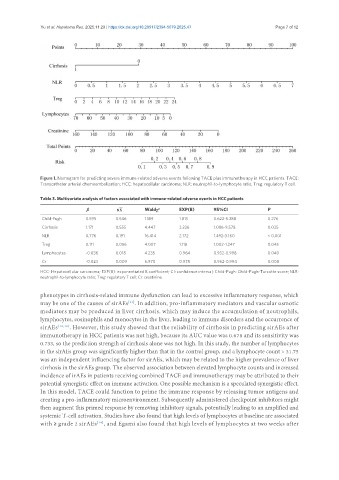
               Figure 1. Nomogram for predicting severe immune-related adverse events following TACE plus immunotherapy in HCC patients. TACE:
               Transcatheter arterial chemoembolization; HCC: hepatocellular carcinoma; NLR: neutrophil-to-lymphocyte ratio; Treg: regulatory T cell.

               Table 3. Multivariate analysis of factors associated with immune-related adverse events in HCC patients
                               β          sX        Waldχ 2     EXP(B)      95%CI              P
                Child-Pugh     0.595      0.546     1.189       1.813       0.622-5.288        0.276
                Cirrhosis      1.171      0.555     4.447       3.226       1.086-9.578        0.035
                NLR            0.776      0.191     16.414      2.172       1.492-3.160        < 0.001
                Treg           0.111      0.056     4.007       1.118       1.002-1.247        0.045
                Lymphocytes    -0.036     0.018     4.235       0.964       0.932-0.998        0.040
                Cr             -0.023     0.009     6.970       0.978       0.962-0.994        0.008
               HCC: Hepatocellular carcinoma; EXP(B): exponentiated B coefficient; CI: confidence interval; Child-Pugh: Child-Pugh-Turcotte score; NLR:
               neutrophil-to-lymphocyte ratio; Treg: regulatory T cell; Cr: creatinine.


               phenotypes in cirrhosis-related immune dysfunction can lead to excessive inflammatory response, which
               may be one of the causes of sirAEs . In addition, pro-inflammatory mediators and vascular osmotic
                                              [11]
               mediators may be produced in liver cirrhosis, which may induce the accumulation of neutrophils,
               lymphocytes, eosinophils and monocytes in the liver, leading to immune disorders and the occurrence of
               sirAEs [12,13] . However, this study showed that the reliability of cirrhosis in predicting sirAEs after
               immunotherapy in HCC patients was not high, because its AUC value was 0.678 and its sensitivity was
               0.733, so the prediction strength of cirrhosis alone was not high. In this study, the number of lymphocytes
               in the sirAEs group was significantly higher than that in the control group, and a lymphocyte count > 31.75
               was an independent influencing factor for sirAEs, which may be related to the higher prevalence of liver
               cirrhosis in the sirAEs group. The observed association between elevated lymphocyte counts and increased
               incidence of irAEs in patients receiving combined TACE and immunotherapy may be attributed to their
               potential synergistic effect on immune activation. One possible mechanism is a speculated synergistic effect.
               In this model, TACE could function to prime the immune response by releasing tumor antigens and
               creating a pro-inflammatory microenvironment. Subsequently administered checkpoint inhibitors might
               then augment this primed response by removing inhibitory signals, potentially leading to an amplified and
               systemic T-cell activation. Studies have also found that high levels of lymphocytes at baseline are associated
               with ≥ grade 2 sirAEs , and Egami also found that high levels of lymphocytes at two weeks after
                                   [14]

