


Page 70 - Read Online
P. 70
Choi et al. Energy Mater. 2025, 5, 500106  https://dx.doi.org/10.20517/energymater.2025.50  Page 5 of 28


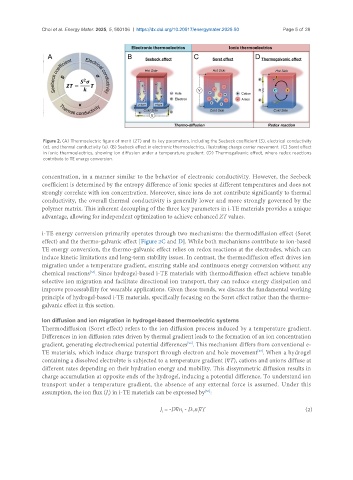
                Figure 2. (A) Thermoelectric figure of merit (ZT) and its key parameters, including the Seebeck coefficient (S), electrical conductivity
                (σ), and thermal conductivity (κ). (B) Seebeck effect in electronic thermoelectrics, illustrating charge carrier movement. (C) Soret effect
                in ionic thermoelectrics, showing ion diffusion under a temperature gradient. (D) Thermogalvanic effect, where redox reactions
                contribute to TE energy conversion.

               concentration, in a manner similar to the behavior of electronic conductivity. However, the Seebeck
               coefficient is determined by the entropy difference of ionic species at different temperatures and does not
               strongly correlate with ion concentration. Moreover, since ions do not contribute significantly to thermal
               conductivity, the overall thermal conductivity is generally lower and more strongly governed by the
               polymer matrix. This inherent decoupling of the three key parameters in i-TE materials provides a unique
               advantage, allowing for independent optimization to achieve enhanced ZT values.

               i-TE energy conversion primarily operates through two mechanisms: the thermodiffusion effect (Soret
               effect) and the thermo-galvanic effect [Figure 2C and D]. While both mechanisms contribute to ion-based
               TE energy conversion, the thermo-galvanic effect relies on redox reactions at the electrodes, which can
               induce kinetic limitations and long-term stability issues. In contrast, the thermodiffusion effect drives ion
               migration under a temperature gradient, ensuring stable and continuous energy conversion without any
                               [56]
               chemical reactions . Since hydrogel-based i-TE materials with thermodiffusion effect achieve tunable
               selective ion migration and facilitate directional ion transport, they can reduce energy dissipation and
               improve processability for wearable applications. Given these trends, we discuss the fundamental working
               principle of hydrogel-based i-TE materials, specifically focusing on the Soret effect rather than the thermo-
               galvanic effect in this section.


               Ion diffusion and ion migration in hydrogel-based thermoelectric systems
               Thermodiffusion (Soret effect) refers to the ion diffusion process induced by a temperature gradient.
               Differences in ion diffusion rates driven by thermal gradient leads to the formation of an ion concentration
               gradient, generating electrochemical potential differences . This mechanism differs from conventional e-
                                                                [56]
               TE materials, which induce charge transport through electron and hole movement . When a hydrogel
                                                                                        [57]
               containing a dissolved electrolyte is subjected to a temperature gradient (∇T), cations and anions diffuse at
               different rates depending on their hydration energy and mobility. This dissymmetric diffusion results in
               charge accumulation at opposite ends of the hydrogel, inducing a potential difference. To understand ion
               transport under a temperature gradient, the absence of any external force is assumed. Under this
                                                                      [56]
               assumption, the ion flux (J) in i-TE materials can be expressed by :
                                     i
                                                       J = -D∇n - D n ∇T                                                                    (2)
                                                                  T i
                                                              i
                                                        i

